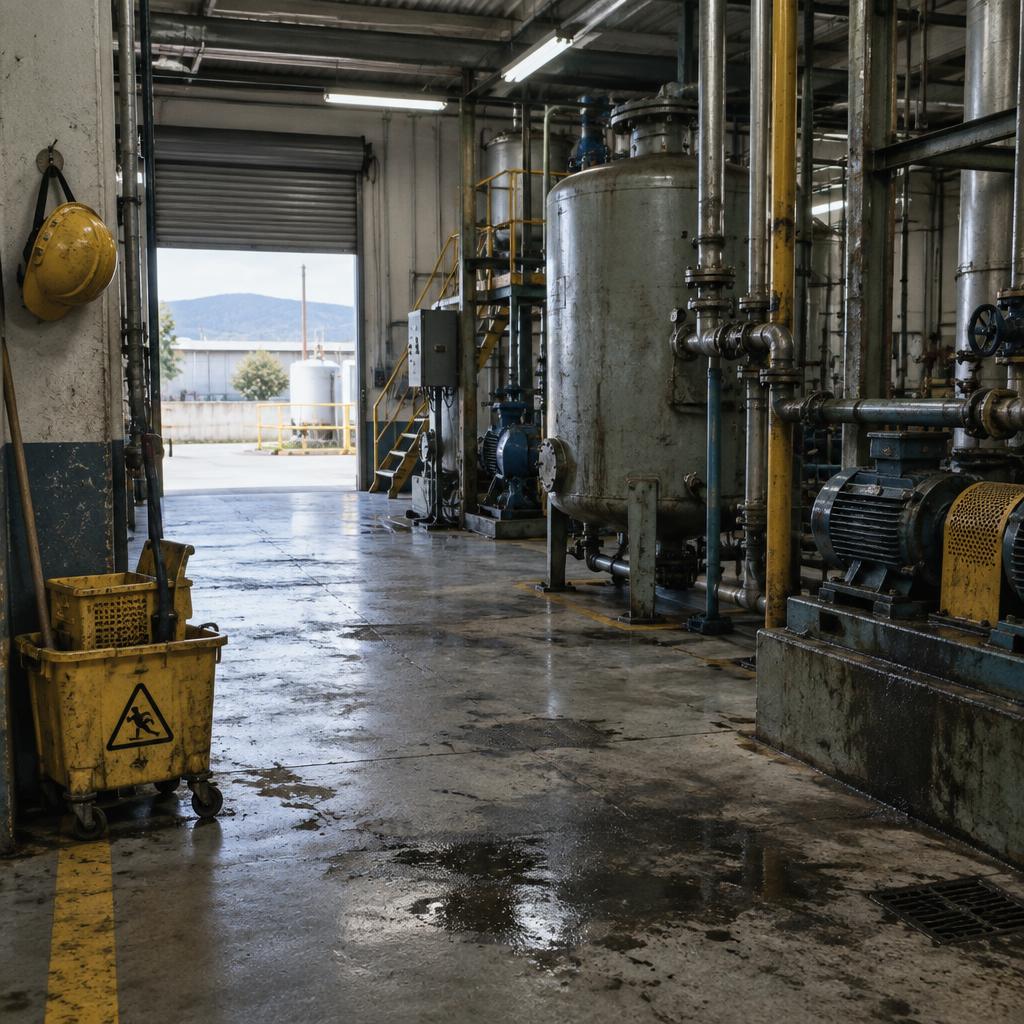
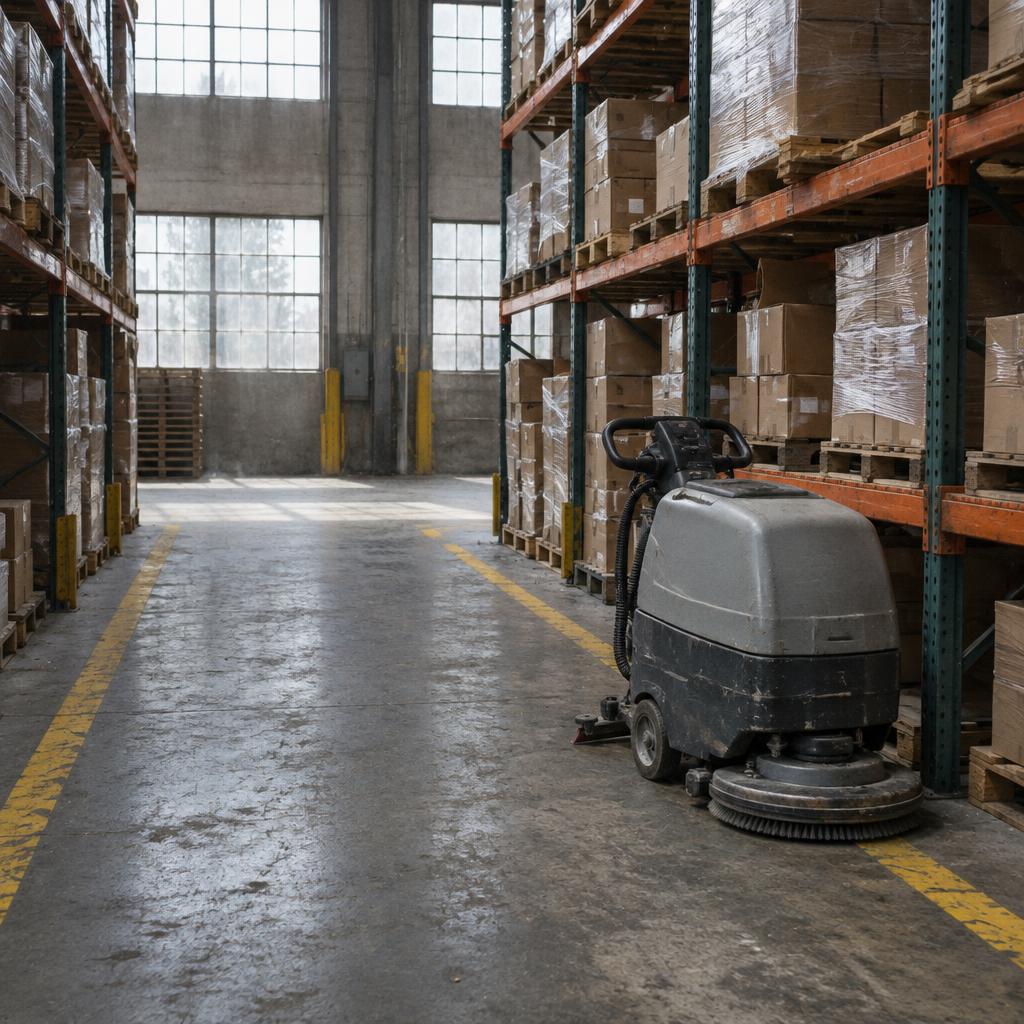
- Plan by area, traffic, and risk, not with a single frequency.
- Frequencies are examples to validate, not regulatory minimums.
- Separate maintenance cleaning from deep cleaning and control reopening.
The short answer
Define the program through four decisions: (1) what areas exist and how much traffic and risk each has; (2) what minimum frequency each needs; (3) what time window allows access without interfering with receiving, order picking, and shipping; (4) who authorizes access, who supervises, and how completed work is documented. The rest consists of execution details agreed upon in writing with the provider.
Why cleaning a CEDIS is different
In many offices, some cleaning is scheduled before or after business hours; others require attention during the workday. In a CEDIS, operations may run across two or three shifts, with trucks arriving and departing, forklifts and material-handling equipment moving around, and pedestrians sharing those spaces.
Occupational safety authorities agree that forklifts and slips, trips, and falls are among the main warehouse hazards. The US agency OSHA notes this on its warehousing page, and Mexico regulates safety conditions for storing and handling materials with machinery under NOM-006-STPS-2023, “Storage and handling of materials using machinery—Workplace safety conditions,” which applies nationwide to workplaces where this activity takes place. For Operations readers, the implication is simple: the cleaning team is part of site operations and must be coordinated accordingly.
Step one: classify areas by traffic and risk
Before discussing schedules, take an inventory. For each area, record:
- Traffic: how many forklifts, people, or trucks pass through? At what times?
- Type of dirt: dust, pallet and stretch-wrap debris, cardboard, product spills, mud brought in by trucks.
- Risk: is there moving machinery, loading and unloading activity, or products sensitive to dust or moisture?
With this inventory, frequency is no longer a matter of opinion.
Step two: choose shifts and time windows
There are three common arrangements, and many CEDIS facilities combine more than one:
| Arrangement | When it works | Points to watch |
|---|---|---|
| Night shift or lower-activity shift | CEDIS facilities with a clear operational pause | Lighting, communication with security, and on-site supervision |
| Windows between picking waves or shift changes | Continuous operations with defined peaks | Short windows: plan cleaning routes by section |
| Dedicated crew during an operating shift | Continuous cleaning of loading docks, restrooms, and dining areas | Ongoing coordination with the shift supervisor |
A useful practice: separate maintenance cleaning (quick, frequent, performed during operations, focused on removing debris and addressing spills) from deep cleaning (floor washing and full-area work that requires closing off a section and is scheduled within a time window). Mixing the two is what often brings operations to a halt.
- STEP 01
Maintenance cleaning
Targeted tasks within authorized time windows.
- STEP 02
Deep cleaning
Isolated section and agreed-upon time window.
- STEP 03
Reopening
Site lead verifies safe conditions.
Cleaning program by area (reference table)
| Area | Tasks covered | Suggested frequency (starting point) | Typical time window | Notes |
|---|---|---|---|---|
| Loading docks and ramps | Sweeping, removal of pallet and stretch-wrap debris, spills | Each shift; targeted inspection after unloading involving a spill | Between arrivals or during shift changes | Coordinate with the dock lead; do not interfere with vehicle and loading movements |
| Rack aisles | Floor sweeping or vacuuming; removal of cardboard and debris | Daily in high-traffic aisles; weekly or every two weeks in reserve storage | Outside picking waves or during a low-activity shift | Ground-level floors only; no work on racks or at height |
| General warehouse floor | Mechanical sweeping or machine scrubbing | Daily sweeping; washing based on floor type and dirt buildup (for example, weekly to monthly) | Scheduled window with the section cordoned off | Cordon off and mark the section; allow it to dry completely before reopening |
| Administrative offices | Floors, shared desks, trash cans, interior glass | Daily; glass and detail work weekly or every two weeks | Before or after office hours | Access subject to document security policy |
| Restrooms and locker rooms | Cleaning and disinfection, restocking supplies | Inspection each shift; cleaning based on occupancy, observed conditions, and hygiene protocol | During the shift, with signage indicating cleaning in progress | Strong impact on employee perceptions |
| Dining and break areas | Tables, floors, waste, trash cans | After each meal period and at closing | After meal service | Waste handling according to site policy |
| Yard and outdoor areas | Sweeping, trash removal, drainage channels | Daily or weekly, depending on truck traffic | Hours with less vehicle movement | Do not clean maneuvering areas while traffic is active |
| Technical rooms and restricted areas | Only with authorization | Upon request or according to an agreed schedule | With an escort | Do not work on electrical or control equipment without authorized personnel |
If your CEDIS stores food or pharmaceutical products, this table does not replace applicable health guidelines: the relevant authority sets hygiene conditions for those areas, and you must consult it.
Coordination with safety personnel
A program without safety rules is not a program. Agree in writing on at least the following:
- Who authorizes access and how cleaning personnel are registered (credentials, log, site orientation).
- Traffic rules: pedestrian routes, forklift crossings, use of vests and personal protective equipment specified by the site.
- Wet-floor or closed-section signage and who removes it. Workplace safety signage is governed by NOM-026-STPS-2008, “Safety and hygiene colors and signs, and identification of risks from fluids conveyed in pipelines”; ask your safety lead how it applies at your site.
- Site procedures for spills, hazardous waste, and areas with sensitive products. The safety NOM standards applicable to your facility define conditions the provider must know; do not take them for granted.
- Chemicals: the provider must have safety data sheets for the products it uses and must not mix products on its own initiative. Selection, dilution, and handling must be managed by trained personnel in accordance with those sheets.
- Work that is not routine cleaning: work at height, inside equipment, in electrical areas, or involving operating forklifts requires its own procedure, trained personnel, and site authorization. It must not be improvised as part of the cleaning service.
Supervision and documentation
Cleaning in a CEDIS depends on supervision, not goodwill. Require:
- An identifiable supervisor on each shift, with a direct channel (radio or phone) to the CEDIS shift lead.
- A log or checklist for each area, with the time and person responsible.
- Periodic joint reviews (weekly or every two weeks, depending on the site) to adjust frequencies based on observations.
Common mistakes
- Defining the program without walking the site with the provider. The frequency table only works when checked against actual conditions on the floor.
- One frequency for everything. Loading docks and reserve storage do not have the same conditions.
- Deep cleaning during peak hours.
- Not defining who removes signage. A closed section left forgotten stops picking.
- Not recording anything. Without a log, any disagreement is settled by opinion.
Warnings
Checklist for agreeing on the program with the provider
*Use: bring this to the walkthrough with the provider and keep the signed version with the contract.*
Complete each item with your team and retain the supporting documentation.
- Joint site walkthrough and list of areasEvidence: Documentation / deliverable: Signed floor plan or area list
- Frequency and time window for each areaEvidence: Documentation / deliverable: Program table attached to the contract
- Expanded version for peak seasonEvidence: Documentation / deliverable: Addendum with additional frequencies and personnel
- Supervisor for each shift and contact channelEvidence: Documentation / deliverable: Name and communication method
- Access rules, orientation, and credentialsEvidence: Documentation / deliverable: Entry procedure
- Routes, signage, and traffic rulesEvidence: Documentation / deliverable: Written site instructions
- Product safety data sheetsEvidence: Documentation / deliverable: Updated safety data sheet file
- Personnel training on site proceduresEvidence: Documentation / deliverable: Orientation record
- What qualifies as a "clean area"Evidence: Documentation / deliverable: Inspection criteria for each area
- Log or checklistEvidence: Documentation / deliverable: Agreed-upon form
- Periodic review and frequency adjustmentsEvidence: Documentation / deliverable: Meeting schedule
- Protocol for spills and incidentsEvidence: Documentation / deliverable: Procedure and contacts
Print it for your next review.
Cleaning a CEDIS without stopping operations depends on three things: knowing your areas, separating maintenance cleaning from deep cleaning, and documenting who authorizes, who supervises, and what gets recorded. The table frequencies are a starting point; a useful program is one you adjust using data from your own site.
Sources
Use this guide for your next decision.
Inventory the areas of your CEDIS and use it on your next walkthrough with a provider. To learn more about this sector, visit the CEDIS page; to request a proposal, use the quote page.