
Introduction
*How to spread non-routine cleaning throughout the year without conflicting with shutdowns, vacations, or peak season—and without overloading your operations.*
Summary
If deep cleaning at your facility is scheduled “when it starts to show,” tasks usually pile up within a few weeks, right when there is the least flexibility: before a visit, after vacation, or during a year-end shutdown. An annual calendar does not require you to clean more; it helps you decide in advance what will be done, during which window, and with how much notice. This guide suggests a way to distribute tasks by quarter and facility type, explains how to align them with periods of low activity, and includes a template. The quarters and scheduling windows are editorial suggestions to structure the discussion, not a regulation or an industry standard.
The short answer
List the deep cleaning tasks your facility actually needs, assign each one to a window during the year when it will cause the least disruption, and spread the workload so that several tasks do not fall in the same week. Then confirm each window with your service provider a few weeks in advance and review the calendar once a quarter. There is no universal frequency: it depends on traffic, surface type, use, and the manufacturer’s or a specialist’s recommendations. What is universal is that a task without a date tends to get done late or alongside other tasks.
How to tell whether you need a calendar
Check whether any of these situations sound familiar:
- Deep cleaning is requested “urgently” before a visit, audit, or event.
- Several major tasks fall in the same week (carpets, floors, and windows), and the operations team objects.
- Nobody remembers when the work was last done, and there is no record.
- Spaces close seasonally, but deep cleaning does not take advantage of that closure.
If you recognize two or more, an annual calendar will probably save you more friction than money. This is an editorial self-assessment, not an official threshold.
What counts as deep cleaning (and what does not)
Routine cleaning keeps a space presentable day to day. Deep cleaning is less frequent work that requires more time, specialized equipment, or taking an area out of use. Which tasks fall into each category should be documented in the contracted service; if you are unsure, the guide to what an institutional cleaning service includes helps distinguish what is covered by the fee from what is quoted separately.
For a calendar, it helps to think in terms of six task groups:
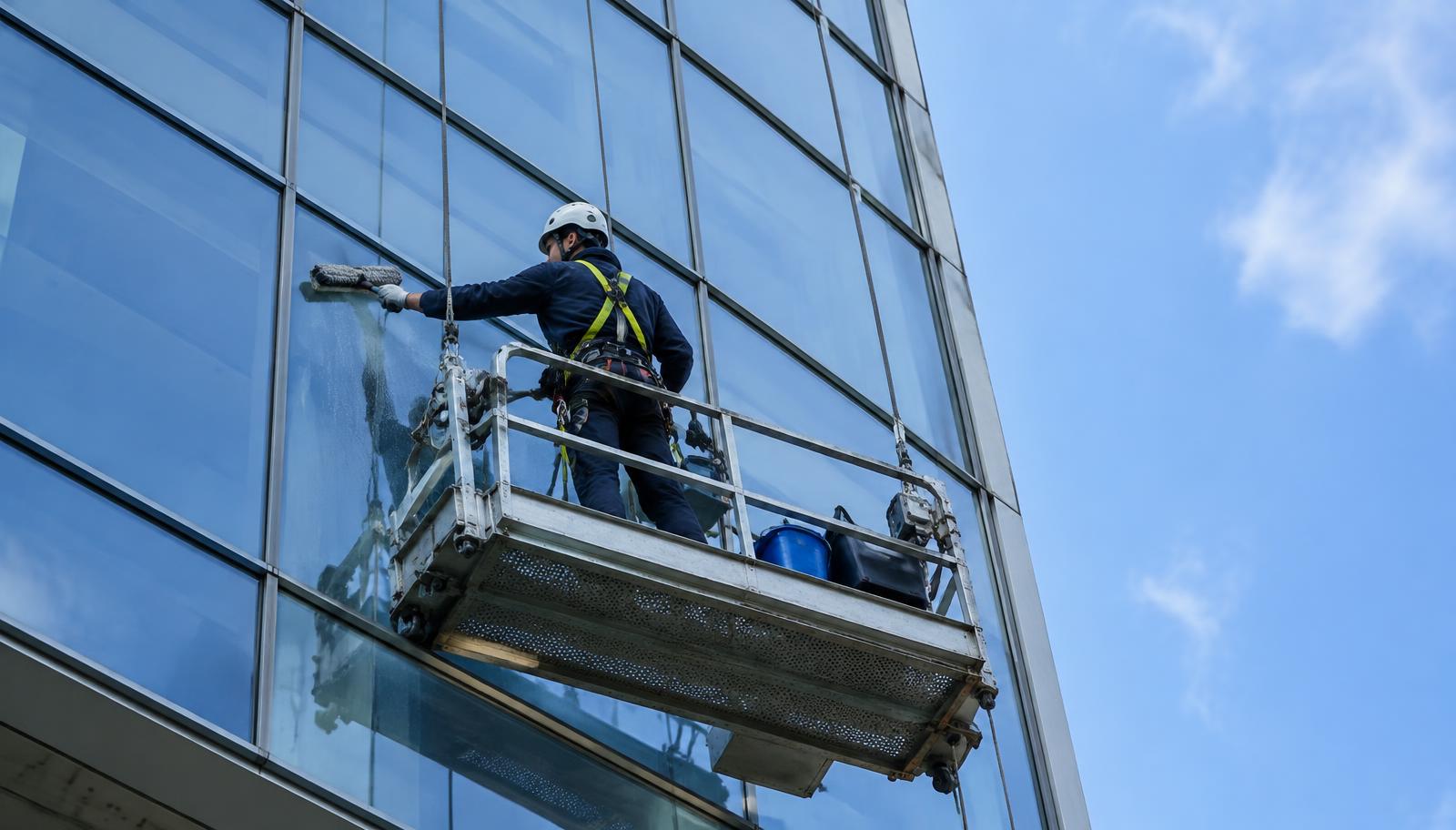
- Windows and facades. Interior, exterior, and, where height is involved, work with its own specific requirements. When a task involves scaffolding, platforms, or lifelines, first review the guide to work at height.
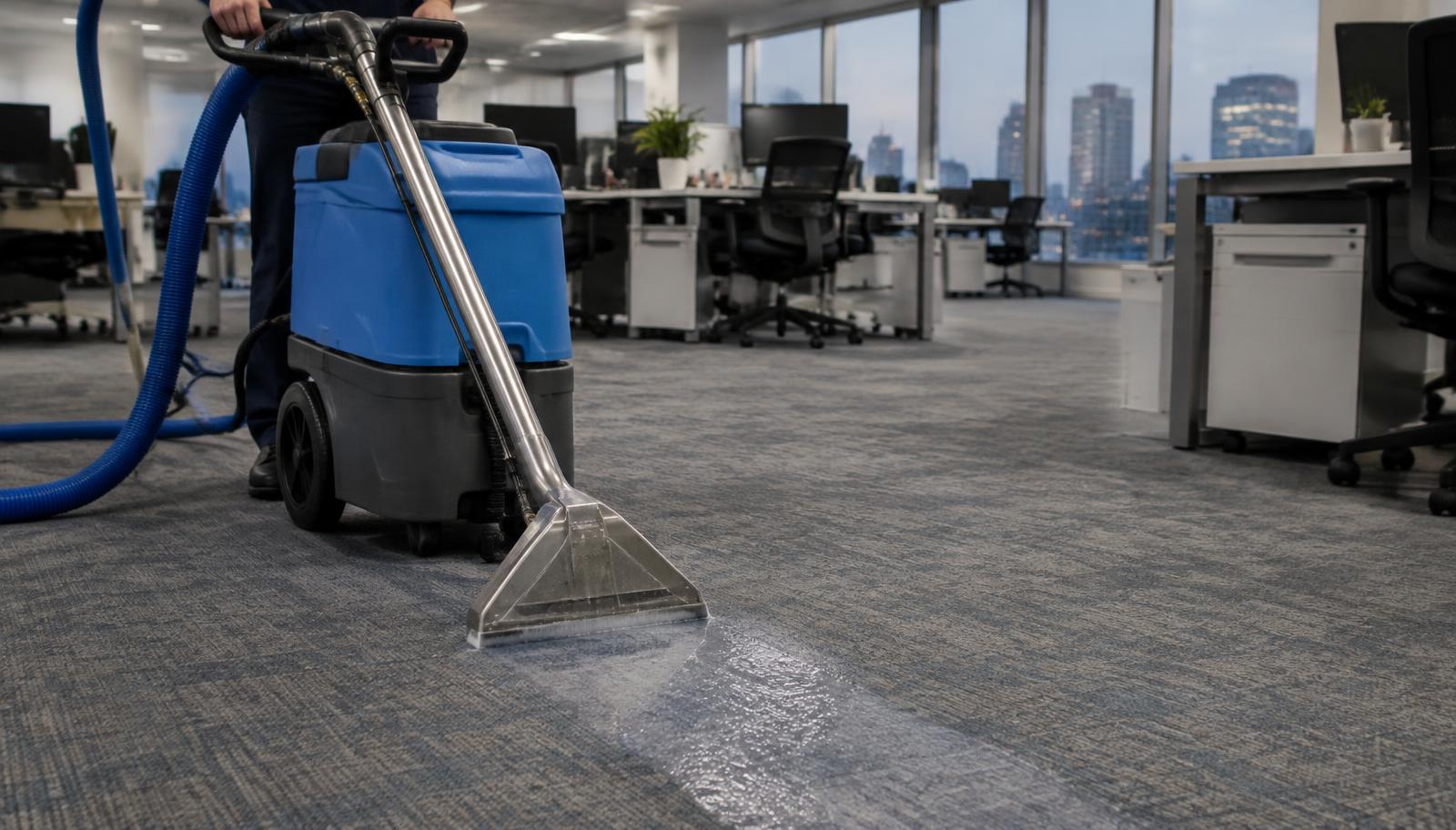
- Carpets and upholstery. These depend on traffic and color. Deep carpet cleaning also requires drying time. The method and criteria for deciding when to do it are covered in the guide to deep carpet cleaning.
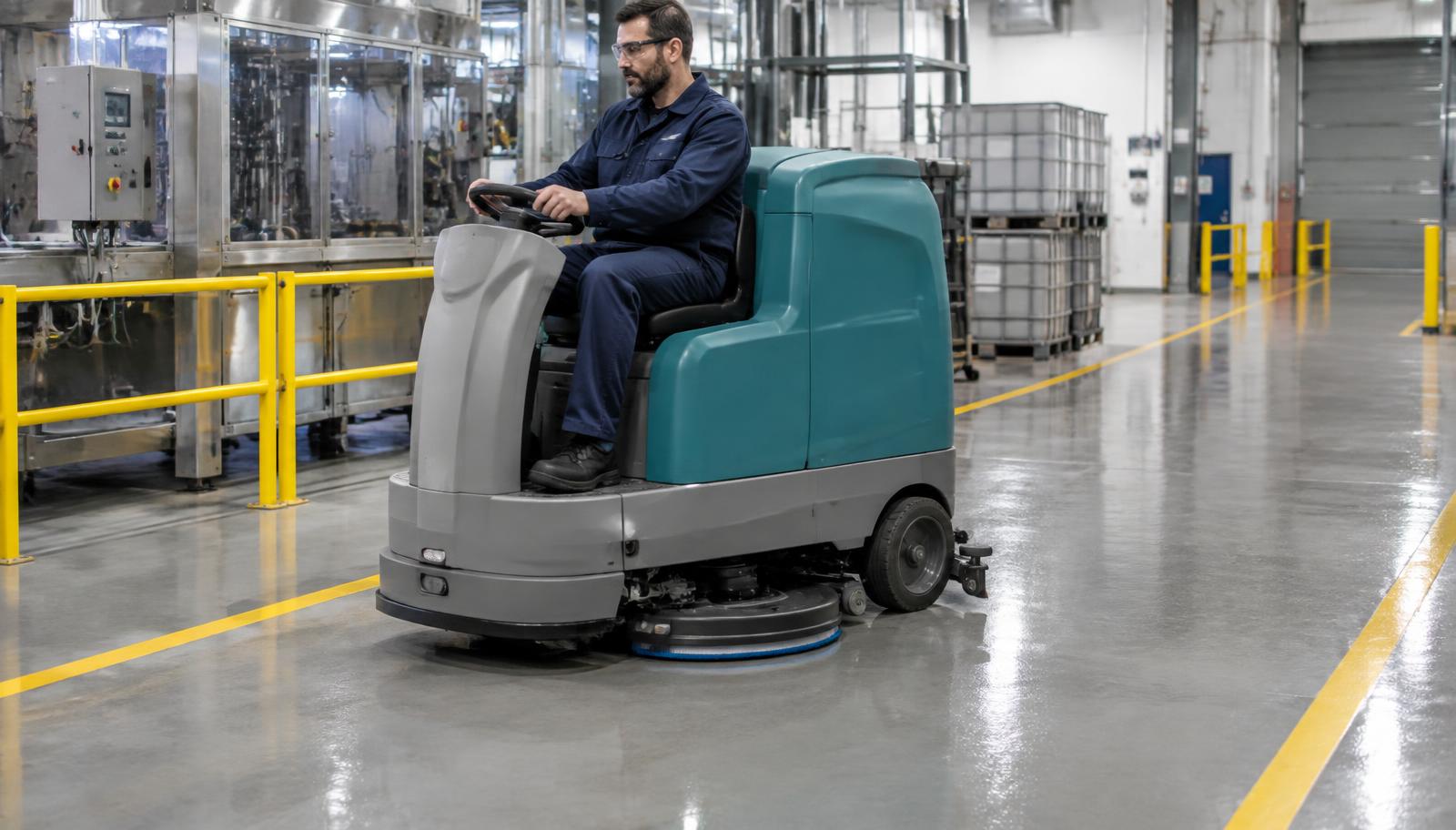
- Hard floors and industrial floors. Polishing, finish restoration, and coating application require cleared areas and curing time. See deep cleaning of industrial floors.
- Restrooms and wet areas. Descaling, grout, ventilation, and fixtures. Schedule these alongside the building maintenance calendar to avoid duplicate closures.
- Storerooms, archives, and storage areas. Cleaning shelving, corners, and high surfaces requires moving inventory or furniture, so it must be planned with whoever manages them.
- Post-season cleaning. Cleaning to prepare for reopening after a period of high occupancy or an event (the end of the school year, a hotel’s peak season, or a distribution center campaign).
This guide deliberately excludes filters, ducts, and air systems. These are technical tasks with their own risks: consult an HVAC or maintenance specialist and the equipment manufacturer to determine what to do and when, and enter them in the calendar only as “to be determined with a specialist.”
And if you are finishing construction or remodeling, post-construction cleaning is not “scheduled deep cleaning”: it has its own stages. See post-construction cleaning.
A quarterly breakdown
As a starting point, and only as an editorial suggestion, you can divide the year into four blocks and assign each a main focus, rather than trying to do everything in every quarter:
| Quarter | Suggested main focus | Why it may help |
|---|---|---|
| Q1 (Jan–Mar) | Start of the year: review restrooms, floors, and storerooms after the December shutdown | Takes advantage of the fact that many operations restart with a light workload |
| Q2 (Apr–Jun) | Windows and exteriors, before the rainy season in many parts of the country | Avoids window work during frequent rain; confirm weather patterns in your region |
| Q3 (Jul–Sep) | Carpets, upholstery, and floors during periods of lower occupancy | Many facilities reduce activity in summer; not all do, so check yours |
| Q4 (Oct–Dec) | Year-end and shutdown preparation: high-impact tasks before critical dates and cleaning to prepare for reopening afterward | Keeps December less busy if the major work has already been done |
This is a working assumption for your first version: if your peak season falls in the second quarter or your shutdown is in August, the plan changes.
Adjustments by facility type
Each facility type has its own logic for scheduling windows:
- Offices and corporate facilities. Natural windows include long weekends and year-end shutdowns. For high-traffic areas such as reception areas, it helps to schedule tasks that require drying for Friday afternoon. See also office shift schedules, which explain how daily operations affect what can fit into each time slot.
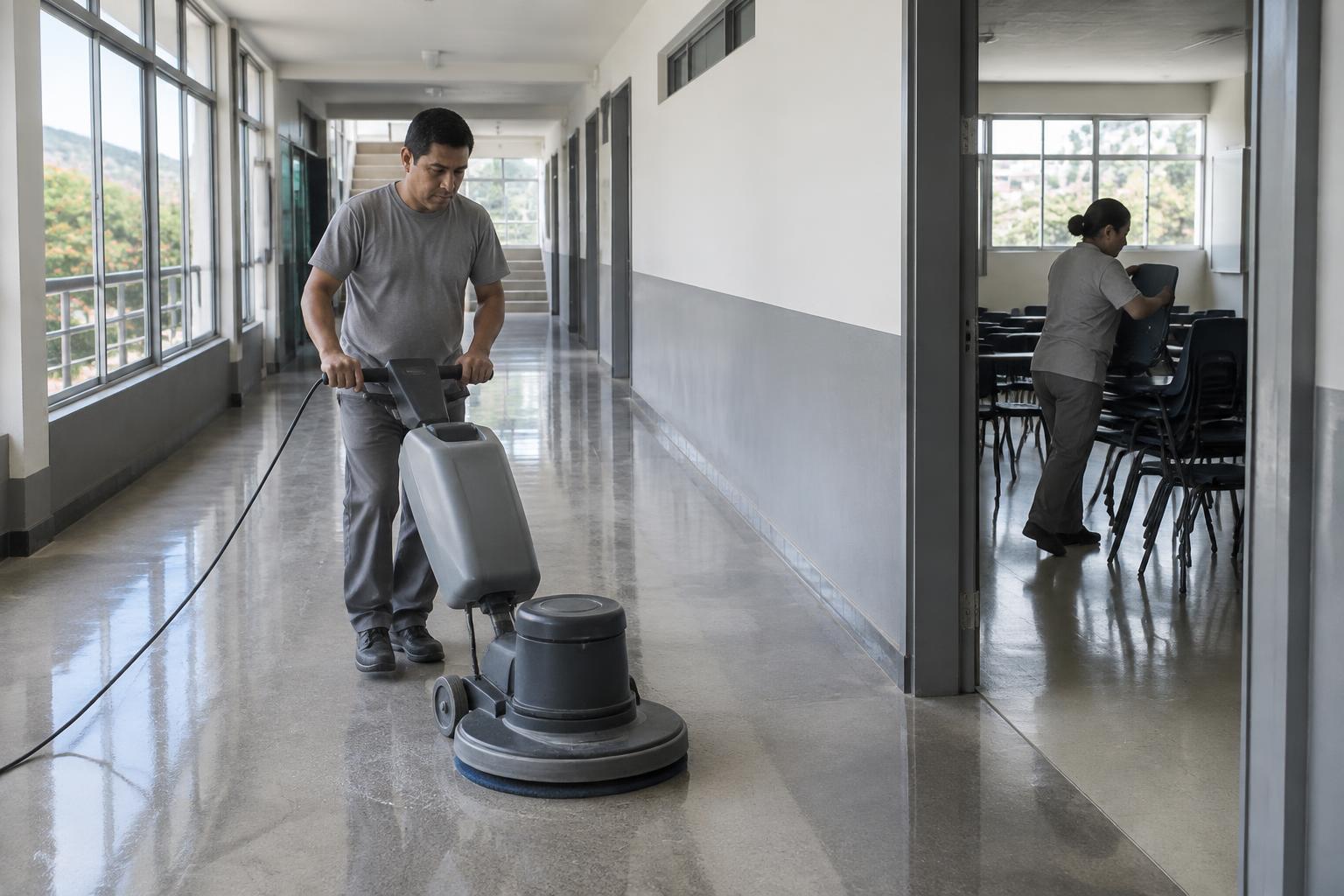
- Schools. The school calendar takes priority. Periods without students are the most natural window for major tasks; these are discussed below and in the guide to school cleaning.
- Hotels. Occupancy determines the calendar. The window is usually during low season or when rooms are blocked off by floor or wing. See the guide to hotel cleaning.
- Industrial buildings, distribution centers (CEDIS), and plants. Scheduled shutdowns, machinery maintenance, and peak shipping periods determine the calendar. Deep cleaning tasks are agreed upon with production and occupational health and safety teams.
- Hospitals and clinics. Areas are rarely completely empty: windows are negotiated by zone with the responsible department; do not use a generic calendar.
Aligning the calendar with your low-activity dates
Deep cleaning works best when it coincides with a period when the area can be taken out of use. Make a list of these dates:
- Scheduled shutdowns (year-end, major maintenance, plant shutdowns).
- Vacations for staff or operations, if concentrated in particular weeks.
- Low season for your industry.
- Long weekends and public holidays, which some facilities take advantage of and others avoid because occupancy is higher.
- Events that require everything to be ready: audits, visits, openings, and the start of the school year.
The school calendar case
For schools, the official SEP calendar is the starting point. Acuerdo 07/07/26, published in the Diario Oficial de la Federación on July 15, 2026, establishes that the 2026–2027 school year for preschool, primary, and secondary education begins on Monday, August 31, 2026, and ends on Friday, July 9, 2027, with 185 school days. The dates for winter break (December 21, 2026, to January 5, 2027) and Easter break (March 22 to April 3, 2027) are reported by media outlets that consulted the calendar; the accessible text of the Acuerdo does not detail them and refers readers to its annexes, so confirm them in the official publication or with your education authority.
Two practical nuances. First, a school may have its own activities (summer courses, sports facilities) outside that calendar: ask the administration. Second, winter and spring windows are short, while the longer summer window competes with maintenance work. Book in advance and reach the shutdown with the task list defined and the provider notified.
How to avoid overloading operations
A calendar with everything in the same week only shifts the problem. These ideas help:
- No more than one major task per zone per window. This is an editorial starting point, not a rule.
- Stagger work by zone. If a task covers the entire building, divide it by floor or wing so that usable areas are always available.
- Spread the workload throughout the year. An industry publication on cleaning planning (CMM, 2021) recommends distributing tasks by frequency in a documented calendar, accounting for vacations, and adjusting the workload throughout the year as long as it fits within the overall annual allocation.
- Leave some buffer time for rain, drying delays, or a shifted shutdown, with one or two open dates per year for unexpected issues.
- Avoid doing work “because it is on the calendar” when it is not needed. An ISSA technical publication on carpets (2017) distinguishes between scheduled interim cleaning and restorative deep cleaning, which is reserved for when it is needed. A calendar can reserve the window, but the final decision on whether to perform the task can be based on an assessment of actual conditions.
- Confirm each window in writing with your service provider a few weeks in advance, including the area, schedule, and who will notify users. Record what was done afterward so that the following year’s calendar is based on data rather than memory. The quarterly provider audit is a good time to review the calendar.
Common mistakes
- Copying another facility’s calendar. Traffic, occupancy, and climate differ.
- Scheduling without asking about drying or curing time. The area returns to use later than expected.
- Putting several major tasks in the same window.
- Treating the calendar as an obligation. It is a tool; if a task is not needed this year, document that and skip it.
- Failing to keep records. Without the date of the last service, next year’s decisions are guesswork.
- Adding filters, ducts, or work at height without a specialist. Enter these as items to be determined.
- Failing to notify users. An area closed without notice generates more complaints than the dirt itself.
Warnings
Editorial guidance, not a regulation. The quarters, windows, and numbers of tasks per zone in this guide are a suggested starting point. The material reviewed for this article did not identify a mandatory frequency applicable to all facilities.
Specialists. Window cleaning at height, filters, ducts, and air systems, and any area with sanitary or safety requirements must be planned with a specialist and the manufacturer. For each product, the safety data sheet takes precedence.
School dates. Reconfirm the calendar applicable to your school in the official publication or with the education authority; there may be adjustments by state or school.
Annual calendar template
*Editorial guidance. Adapt it to your facility; the “suggested window” entries are starting ideas, not technical recommendations.*
| Deep cleaning task | Zone / area | Suggested window (to be confirmed) | Prerequisite | Time out of use (estimate with the provider) | Person responsible for notification | Last completed | Next date | Status |
|---|---|---|---|---|---|---|---|---|
| Interior and exterior windows | Q2 (or before your region’s rainy season) | If height is involved: work-at-height requirements | ☐ | |||||
| Carpets and upholstery | Shutdown or low-occupancy period | Move furniture; drying | ☐ | |||||
| Hard / industrial floors | Shutdown or long weekend | Cleared area; curing | ☐ | |||||
| Restrooms and wet areas | Coordinate with maintenance | Notify users | ☐ | |||||
| Storerooms and archives | Low inventory or shutdown | Access and relocation | ☐ | |||||
| Post-season cleaning | After peak occupancy | Define scope | ☐ | |||||
| Filters, ducts, and air systems | To be determined with a specialist | Specialist / manufacturer | ☐ | |||||
| Make-up window (unexpected issues) | 1–2 open dates per year | — | — | ☐ |
How to use it: (1) fill in “Zone” and “Last completed” first; (2) mark your shutdowns, vacations, and low season on a calendar; (3) assign each task to a window and check that two major tasks do not coincide in the same zone; (4) confirm with your provider; (5) review the table each quarter.
Conclusion
A deep cleaning calendar does not make you clean more: it lets you decide when, with how much notice, and without overloading anyone. Start with your low-activity dates, spread out the tasks, leave some buffer time, and record what was done. That way, the next year no longer starts from scratch.
Next step
Fill in the template with the six tasks and your four or five low-activity dates, and share it with your provider or operations department to validate the windows. If you are building your process from scratch, consult the guide to hiring institutional cleaning services and, if you want a proposal that includes deep cleaning tasks with dates, use the quote page.
Cited sources: Acuerdo 07/07/26, 2026–2027 school calendars (DOF July 15, 2026, via SIDOF) · El Financiero, SEP 2026–2027 calendar (August 30, 2026) · Proceso, SEP publishes 2026–2027 calendar (July 15, 2026) · ISSA, "Keep Commercial Carpeting Looking Its Best" (2017) · CMM, "How to Master Your Cleaning Plan" (2021)
Use this checklist in your next quote or renewal.
To get a quote from SELIMEX, use the quote page; for more information, see the compliance section.