
Summary
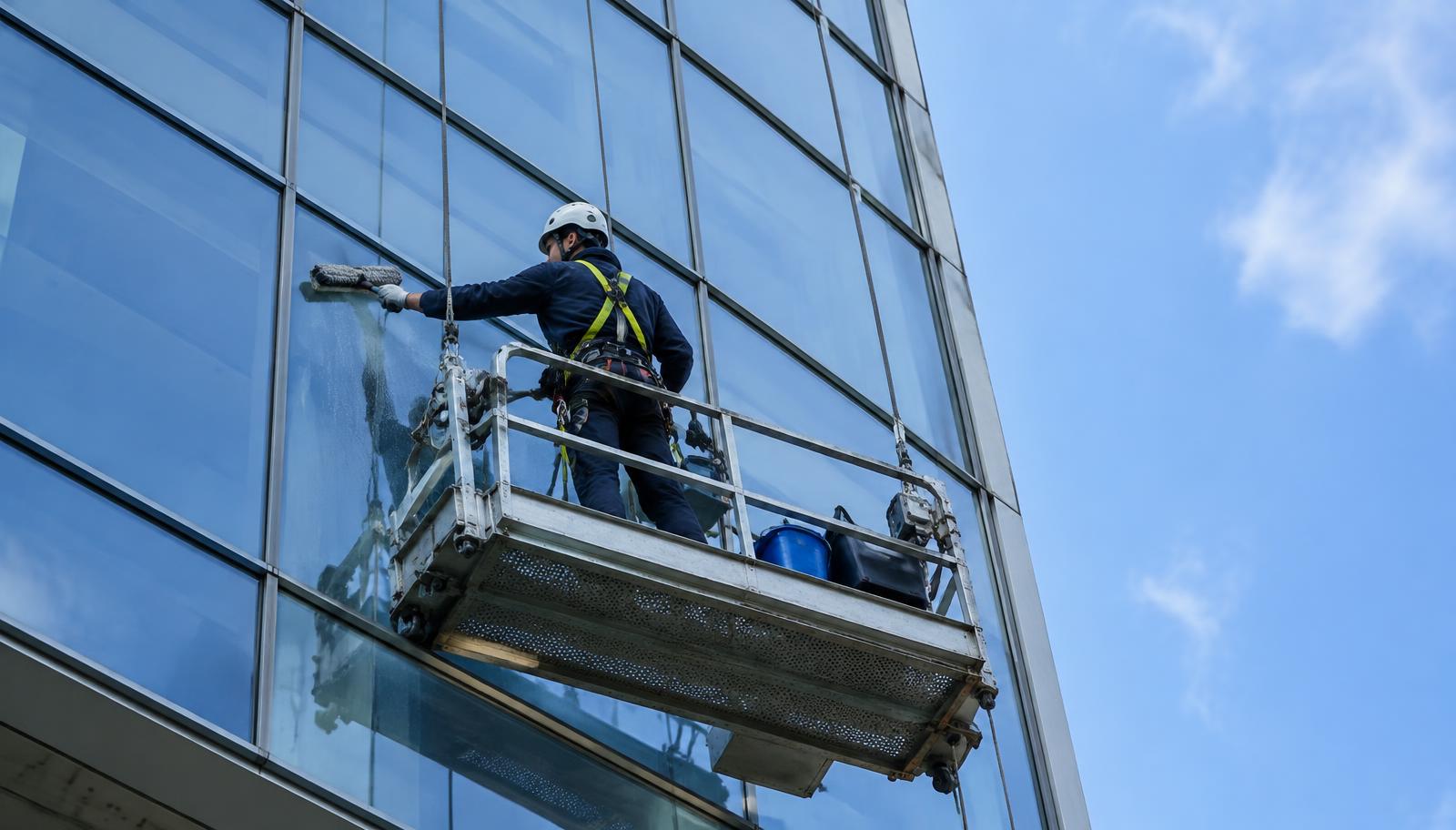
Cleaning a building's windows and facades involves working at height, and Mexico has a specific standard: NOM-009-STPS-2011, "Safety conditions for working at height." Before authorizing service, the hiring company should request written job risk analysis, personnel authorization, training evidence, medical examinations, equipment inspection and maintenance, fall-protection equipment, an emergency plan, and evidence of the provider's labor compliance. This guide organizes those requirements into a checklist; it does not teach how to perform the work. Technical details must be confirmed with an occupational health and safety specialist.
The Short Answer
Before authorizing work, request a documentation package for each job: who will do it (named, authorized personnel), how (procedure and prior analysis of area conditions), with what (equipment with recorded inspections and maintenance, plus a fall-protection system), what happens if something fails (emergency plan), and how it is substantiated (training, medical examinations, labor compliance). If the provider cannot produce it, the prudent decision is to withhold authorization until it does. Have an occupational health and safety specialist review anything you cannot assess.
Why the Hiring Company Cannot "Just Receive the Service"
It is common to assume facade safety is the provider's responsibility. NOM-009-STPS-2011 states that when an employer hires third parties for work at height, it must supervise their compliance with the standard (section 5.14). Anyone hiring this service for a building while acting as employer to their own staff must consider this. If your company is the hiring party but not the employer of the provider's personnel, your legal team should clarify the precise scope of your obligation.
Separately, the LFT (Federal Labor Law) (Article 14) states that a party subcontracting specialized services is jointly and severally liable with respect to the workers involved if the contractor fails to meet its labor obligations, and that subcontracting must be formalized in writing; Article 15 requires subcontracted service providers to register with STPS. In practice, an accident on your facade is not just the provider's problem, so it is better to insist on requirements beforehand than regret omissions afterward.
The Applicable Standard and Its Current Status
- Designation and title: NOM-009-STPS-2011, Safety conditions for working at height. It was published in the Diario Oficial de la Federación on May 6, 2011, and took effect August 8, 2011, according to the Secretaría de Economía standards catalog.
- Current status: the catalog lists it as current and records no subsequent amendments or replacement standard. Still, confirm its current status with your specialist before citing it in a contract.
- Scope: it applies nationwide wherever work at height is performed. Its definition describes work performed more than 1.80 m above the reference level (section 4.33). Other thresholds apply to specific circumstances; do not generalize them—ask your specialist.
- Personal protective equipment: NOM-009 refers to the PPE standard. The version it cited, NOM-017-STPS-2008, was replaced by NOM-017-STPS-2024, published in the DOF on March 28, 2025, and effective September 28, 2025. Ask the provider to align its equipment and PPE program with the current version.
The complete standard is available in the official DOF text. This article does not interpret it: it is a guide to hiring services.
Preauthorization Requirements Checklist
The following items correspond to employer obligations established by the standard (Chapter 5 onward). The hiring company does not perform them; it requests and verifies them.
1. Prior work-area analysis. The standard requires analyzing area conditions before starting to identify risk factors (5.1). Request the document, not a verbal promise, and ensure it is specific to your building: facade, roof, access points, and the area below.
2. Procedure or instructions in Spanish. The standard requires instructions, manuals, or procedures in Spanish based on the equipment manufacturer's instructions (5.2). Check that they match the system actually being used (for example, suspended equipment, a platform, or roof access), rather than a generic system.
3. Written personnel authorization. Only personnel trained and authorized by the employer may work at height. Written authorization includes the worker's name, work type and area, applicable safety measures, date, time and estimated duration, and the signature of the employer or designee (7.2). Request a copy for each named individual. The standard expressly requires this authorization for tower scaffolds, suspended scaffolds, and elevating platforms (5.3).
4. Training and instruction. Chapter 16 requires training, practical instruction, and information for workers based on the system or equipment, their tasks, and emergency response. That standard does not itself require a certificate, but the occupational competency or skills certificate (DC-3) is the document workers use under the LFT to demonstrate they have completed and passed a training course, according to the STPS registration-system guide. Request each worker's current DC-3 and the course content. A certificate does not replace the authorization in item 3.
5. Medical examinations. The standard requires medical examinations for those working at height (Chapter 14). Request verification of written records containing the worker's name, assessment, and physician details. These are personal health data: provider confirmation that a current assessment exists is sufficient, without your retaining the medical file.
6. Equipment inspection and maintenance. The standard requires an inspection and maintenance program with records (5.7, 5.8). Request records for the equipment to be used at your building, including dates and the person responsible. Equipment without a documented history is a red flag.
7. Fall-protection system. The standard requires the employer to provide at least one personal fall-protection system in addition to applicable PPE (5.9). Request the list of assigned equipment; its technical selection is not the hiring company's decision.
8. Emergency response plan. Chapter 15 details minimum plan contents, including a responsible person, communications, first aid, and use of rescue equipment. Request a building-specific plan coordinated with your internal security team.
9. Stop-work conditions. The standard requires stopping work when equipment is unsafe or weather conditions pose risks (5.6). Agree in writing on who decides to stop work and that the provider will not be pressured by your building's schedule.
10. On-site supervision. The standard requires monitoring compliance with instructions and safety measures (5.5). Request the name of the person responsible on-site during the work.
11. Provider labor compliance. Verify specialized-services registration and compliance with labor and social security obligations; the method is in the REPSE verification guide and the provider file guide.
12. Contract and insurance. Ensure the contract reflects these obligations, responsibilities, and evidence requirements (see minimum contract clauses). Your legal team reviews insurance.
What to Check on the Workday (Without Taking Over Operations)
Your role is not to direct the provider or correct its technique, but to confirm that what was promised is in place: on-site personnel match written authorizations, equipment and the person responsible match the documentation, traffic zones are agreed on, and your security staff knows the emergency contact. If something appears unsafe, ask the person responsible to stop and consult your specialist; do not improvise instructions.
Common Mistakes
- Deciding solely on price. A low price may hide omissions. See the service pricing guide.
- Taking the provider's word for it. What is not in writing cannot be verified.
- Requesting generic documents. A course certificate does not prove personnel are authorized for your job.
- Confusing training with authorization. These are different documents.
- Applying schedule pressure. Rigid dates encourage continued work in adverse conditions.
- Not coordinating with building security. An emergency plan disconnected from the site is not useful.
- Citing a standard without confirming its current version.
Warnings
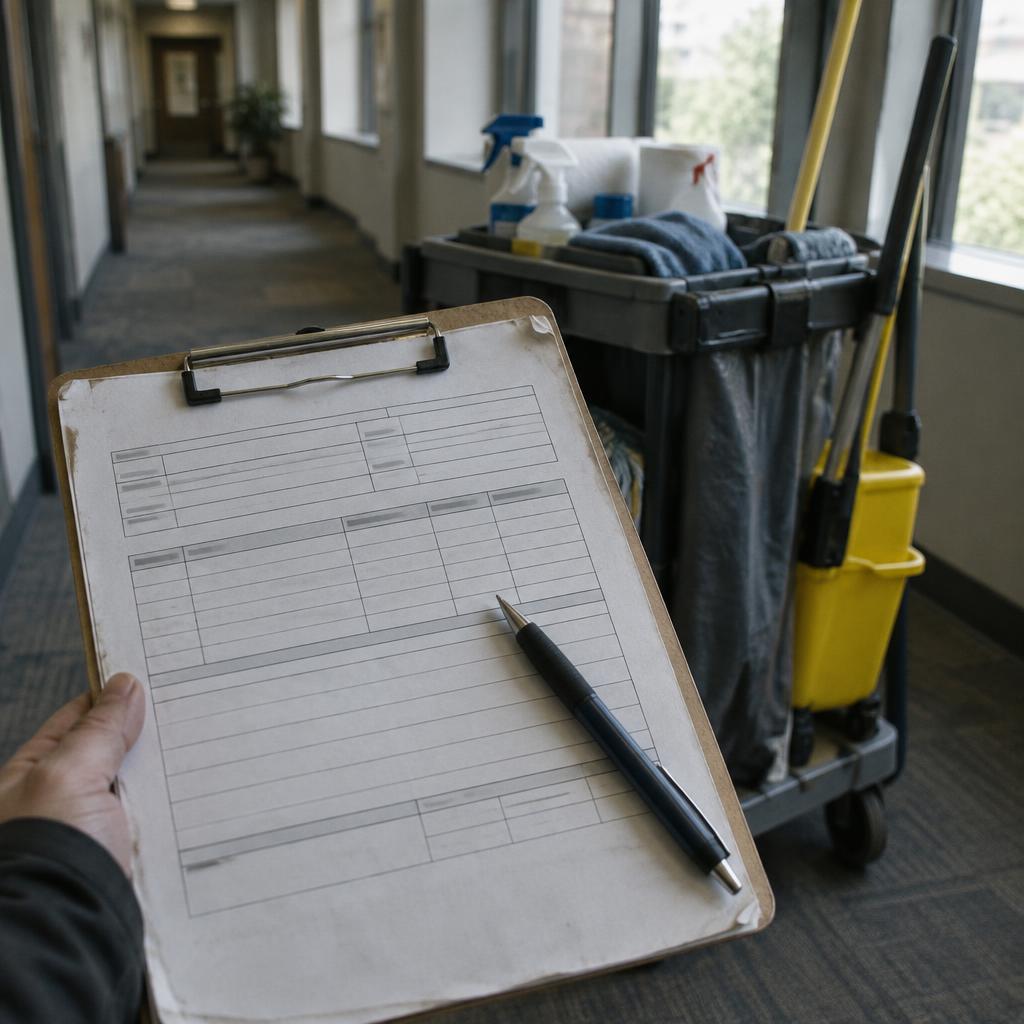
Practical Resource: Requirements Checklist
Check each item before signing the work authorization. For any "no," record what is missing, who will provide it, and by when.
| Requirement | Evidence received (yes / no) | Date | Notes |
|---|---|---|---|
| Prior area analysis specific to the building | |||
| Procedure or instructions in Spanish matching the equipment | |||
| List of named personnel | |||
| Written authorization for each worker | |||
| Training evidence (DC-3 and syllabus) | |||
| Confirmation of current medical examinations | |||
| Equipment inspection and maintenance records | |||
| Assigned fall-protection system (list) | |||
| Site-specific emergency response plan | |||
| Agreed stop-work criteria for unsafe conditions | |||
| Named on-site supervisor | |||
| Current REPSE and labor compliance evidence | |||
| Contract with obligations and evidence requirements; insurance reviewed by legal | |||
| Coordination with building security (access, zones, contacts) | |||
| Package reviewed by an occupational health and safety specialist |
Decision: ☐ Authorized ☐ Authorized with conditions ☐ Not authorized Responsible person: ________ Date: ________
Use: send this to the provider with the request for quotation so it supplies evidence from the outset (see the request for quotation guide).
Conclusion
Authorizing work at height does not require the hiring company to be a safety expert; it requires knowing what to request, checking it against evidence, and relying on a specialist for technical matters. Resistance to documentation is valuable information before signing.
Next Step
Take a window or facade service you are about to hire or renew, apply the checklist, and share missing items with the provider. For documentation compliance, visit the compliance section, learn about the approach for corporate offices, or request a proposal on the quote page.
Sources
Bring this guide to your next provider review.
To get a quote from SELIMEX, use the quote page; for more information, see the compliance section.