
Summary
Hiring cleaning services for an industrial facility does not mean the vendor can clean any surface on any machine. Certain tasks fall under general cleaning and can be delegated under a written scope of work; others require the facility to shut down, lock out, or authorize the equipment, and must be executed or cleared by in-house personnel; and hazardous waste is an entirely separate responsibility that cannot be resolved with "cleaning will pick it up." This guide outlines how to classify each task, which Mexican Official Standards (NOMs) to keep at hand, what to require regarding permits and safety data sheets, and includes a decision table and a checklist.
The short answer
Delegate to the contractor the cleaning of areas and surfaces that do not require servicing the machine or entering areas with special hazards: floors, accessible structural elements, and equipment exteriors while the machine is in the operational condition defined by your plant. Keep in the plant's hands (maintenance, operations, or a specialized contractor you authorize) anything that requires de-energizing equipment, opening guards, entering a confined space, or managing hazardous waste. And put the division of labor in writing: which tasks, under what equipment condition, with what permit, and who confirms that condition.
Why the boundary is not obvious
On the plant floor, "cleaning the machine" can mean anything from wiping down an exterior housing to pressure-washing an internal compartment or sump. For Procurement, it is a single line item in the scope of work; for Environmental Health and Safety (EHS), each carries entirely different risks. When a scope simply states "machinery cleaning" without qualification, each party fills the void their own way: the contractor assumes someone will tell them what they can touch, and production assumes the contractor already knows. Incidents and billing disputes almost always originate there.
Our articles on plant zones and work permits and industrial floors cover area walkthroughs and floor cleaning methods. Here the focus is different: what to delegate when machinery, structures, and chemical substances are involved.
Three categories of tasks
Classify every task in the scope into one of these three categories. This is an operational framework to organize the conversation, not an official regulatory classification; your EHS specialist must validate it for your specific plant.
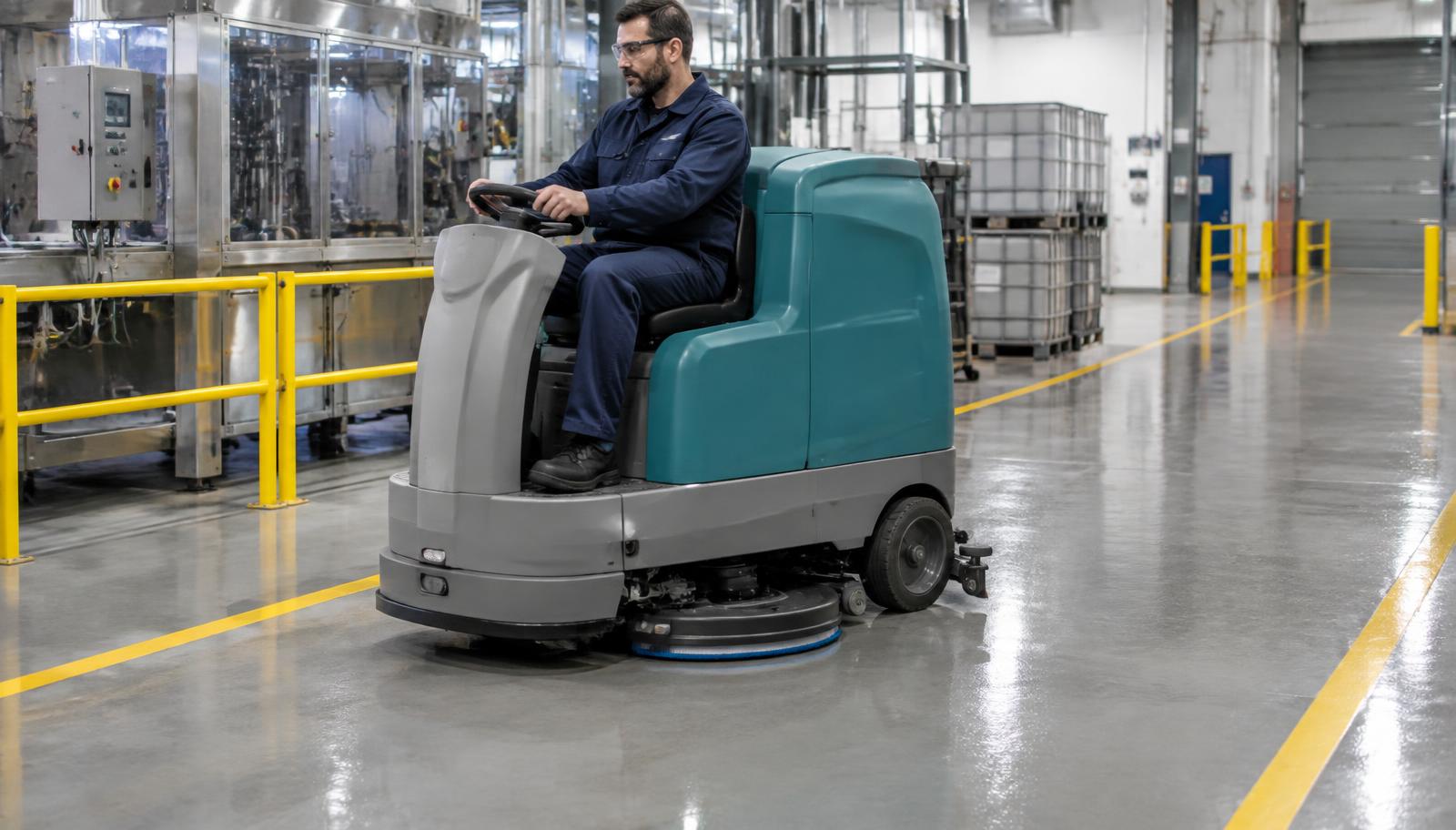
1. Delegable under a written scope. General cleaning that does not require servicing equipment: sweeping and scrubbing floors, removing dust from accessible surfaces, cleaning offices, restrooms, and break rooms, and wiping down equipment exteriors that the plant has defined as cleanable in their current operating state. Even here, the scope must specify areas, frequency, schedules, and restricted zones.
2. Delegable only under conditions fulfilled and confirmed by the plant. Tasks near or on machinery that depend on equipment being stopped and locked out by designated personnel, on a specific work permit, or on an approved chemical product. The contractor does not define these conditions: they receive them, verify they are in place, and do not begin work until they are confirmed.
3. Not delegable to a general cleaning contractor. Anything that involves controlling hazardous energy, opening or removing machine guards, entering confined spaces, or handling hazardous waste. These tasks must be performed by qualified, authorized in-house personnel or by a specialized contractor that your plant selects and supervises under its own procedures.
Equipment with hazardous energy
A machine that appears turned off may still store electrical, mechanical, pneumatic, hydraulic, or thermal energy. Who isolates it and how is governed by your plant's procedures and trained personnel; this guide does not describe or replace those protocols.
What is essential to understand is the regulatory framework, which we reference carefully because Mexico's official catalog does not contain a single standard dedicated exclusively to "hazardous energy control" (LOTO):
- NOM-004-STPS-1999, *Protection systems and safety devices on machinery and equipment used in workplaces* (issued by the Secretariat of Labor and Social Welfare, STPS), remains in force according to the official catalog (published in the Official Gazette of the Federation, DOF, on May 31, 1999; last systematic review October 18, 2019, resulting in confirmation; a draft revision from 2021 exists, though the catalog does not indicate whether it was finalized). According to the text in the DOF, its scope applies to workplaces using machinery and equipment in their processes, and it requires energy lockout to be performed before and during maintenance by those conducting the maintenance, with notice given to affected workers. It also mandates training for maintenance personnel.
- NOM-029-STPS-2011, *Maintenance of electrical installations in workplaces – Safety conditions*, is in force according to the official catalog (DOF December 29, 2011, effective March 29, 2012). It applies to electrical installations, not all machinery; it includes lockout and signage requirements, mandates written authorization for trained workers performing certain tasks, and requires the employer to ensure contractors comply with its provisions.
The practical takeaway does not hinge on regulatory section numbers: the determination that a machine is in a safe condition to be serviced or cleaned near energized or moving parts rests with the plant, never with the general cleaning contractor. If the cleaning you require demands de-energization, make it part of an in-house plant procedure with designated staff, or contract a specialized provider. And if the cleaning contractor finds a machine in a condition different from what was agreed upon, they must not begin work and must notify plant personnel immediately.
Confined spaces
NOM-033-STPS-2015, *Safety conditions for performing work in confined spaces*, is in force according to the official catalog (DOF August 31, 2015, effective November 30, 2015, with a systematic review on September 12, 2025, resulting in confirmation). According to the published standard, it applies to workplaces where such work is performed; it mandates a written work permit for entry and work, valid for a maximum of one shift, along with verified personnel training. It also states that the employer must verify that contractors comply with the standard.
Two direct implications for anyone hiring cleaning services:
- Tanks, silos, pits, hoppers, sumps, and similar structures are not "general cleaning." Before including them in any scope, your EHS specialist must determine whether they constitute confined spaces under the standard. If they do, the work requires the plant's formal authorization process and personnel certified for that purpose. Most commercial and industrial cleaning contracts are not designed for this.
- That the contractor must "not enter" must be stated in writing. If the scope does not explicitly exclude these areas, assumptions can easily be made that they are included.
Solvents, degreasers, and safety data sheets
NOM-018-STPS-2015 is in force according to the official catalog (DOF October 9, 2015; effective October 9, 2018; last systematic review December 8, 2023, confirmed). According to its text in the DOF, the employer must maintain Safety Data Sheets (SDS / HDS) in Spanish for all handled substances and mixtures, make them permanently accessible to workers in handling areas, and inform workers and contractors handling these substances about their hazards and required labeling.
For machinery cleaning, this translates into four practical rules:
- No solvent or degreaser enters the plant without an SDS reviewed by EHS, even if supplied by the contractor. The review must evaluate the product against the specific work area: substrate materials, coatings, seals, surrounding chemicals, and ignition sources. Compatibility is determined by the equipment manufacturer and the SDS, not by shift-floor habits.
- The equipment manufacturer's instructions govern. Many machines carry strict restrictions regarding approved chemicals and cleaning methods (for instance, on painted surfaces, elastomer seals, or electrical components). Require Maintenance to verify what the equipment manual specifies.
- A closed list of authorized products, complete with their SDS, and a simple rule: anything not on the list cannot be used without written approval. Our guide on janitorial staff health and safety covers PPE and SDS requirements in detail; they are not repeated here.
- No unauthorized chemical mixing. Combining products on the floor can generate dangerous chemical reactions. Every product must be used strictly according to its label and SDS.
This guide does not recommend specific products or dilution ratios for any equipment.
Permits and coordination with plant safety
Work permits are the mechanism by which the facility converts a physical condition ("the machine is in this verified state") into written authorization. For machinery and industrial facility cleaning:
- A closed list of permit-required tasks, defined by EHS (not by the on-duty floor supervisor). The baseline framework is covered in our guide on plant zones and permits.
- Clear issuance, sign-off, and lead-time protocols. The permit must name the authorized personnel, work area, and validity window. If the equipment, area, or crew differs from what is documented, work must not start.
- Designation of who confirms equipment condition before the contractor works near it: name, title, and written sign-off.
- A designated safety contact per shift, for both the plant and the contractor, with direct phone numbers.
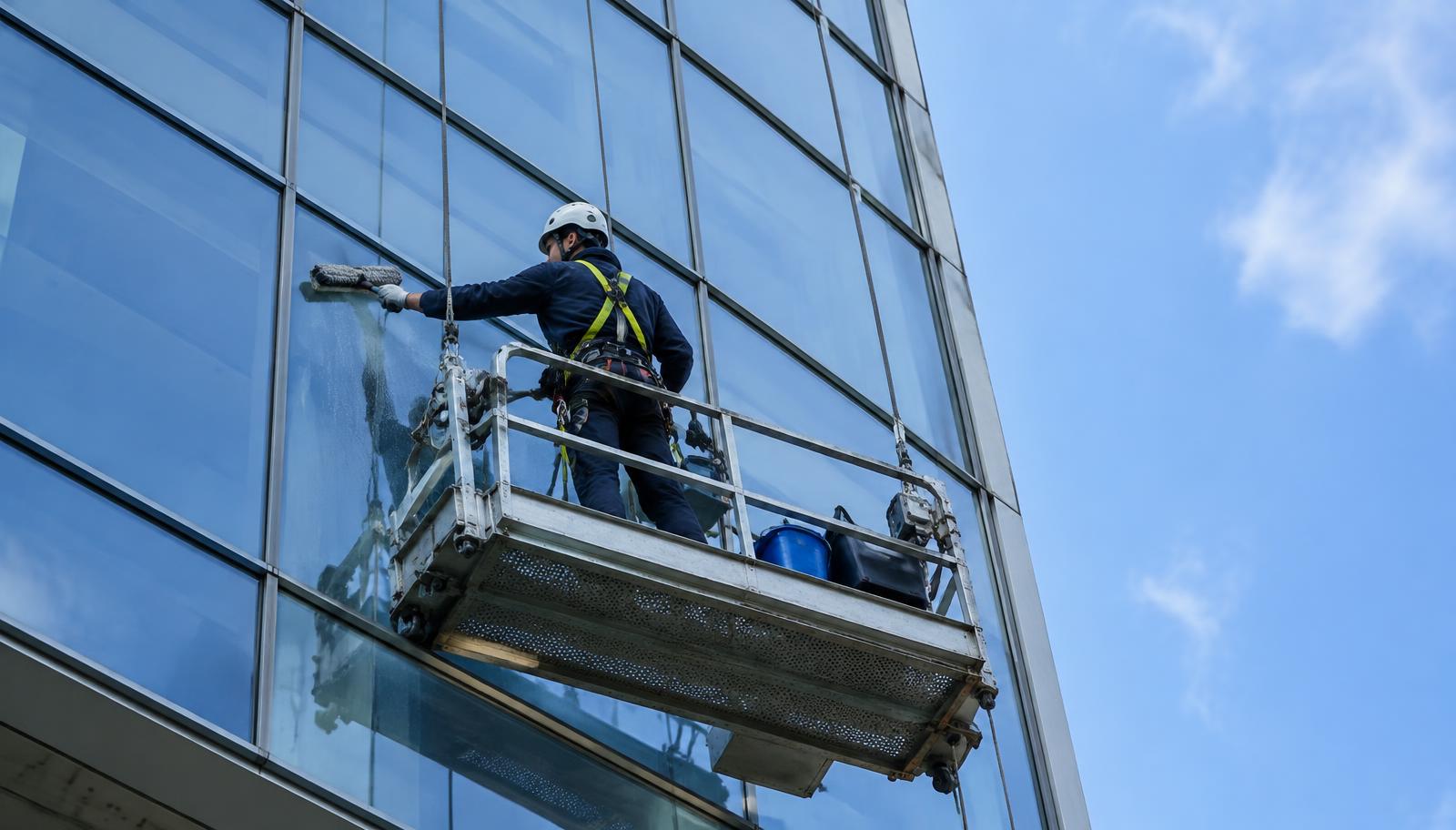
- Work at heights (overhead structures, ductwork, ceilings, light fixtures) has its own dedicated guide: cleaning at heights.
- Protocols for unexpected conditions or incidents, outlined in our incident reporting protocol.
A key legal boundary that your legal counsel should review: the plant verifies compliance with site safety requirements and provides hazard communication, but does not directly supervise or direct the contractor's employees. Observations must be routed through the contractor's on-site supervisor, with documentation. Through site permits and internal procedures, the plant maintains control over its facility without inadvertently exercising operational command over third-party personnel.
Hazardous waste: a separate responsibility
Cleaning machinery or an industrial plant generates waste streams: solvent-soaked rags, wash water, sludge, and empty chemical containers. Some of these may be hazardous. NOM-052-SEMARNAT-2005, *Establishing the characteristics, identification procedure, classification, and listings of hazardous waste* (DOF June 23, 2006, issued by the Secretariat of Environment and Natural Resources, SEMARNAT), is listed as active in the official catalog. That same catalog records a systematic review dated August 18, 2026, resulting in a modification outcome, without listing a formal replacement project; before citing it in a contract, your environmental compliance manager should verify its current regulatory status.
What matters for defining your scope of work is clear operational segregation:
- Determining whether waste is hazardous is the responsibility of your environmental manager, never the cleaning contractor.
- Storage, manifesting, and authorized disposal belong to plant operations (or its registered waste generator and licensed environmental management provider), using dedicated chain-of-custody documentation. If the cleaning scope includes any of these tasks, it must be explicitly defined; standard practice is to exclude them.
- The cleaning contractor can agree to segregate generated waste according to the plant's designated containers and instructions, without handling or transporting hazardous waste off-site.
- The cost and disposal volume generated by specialized cleaning operations must be budgeted upfront, not after the fact.
Environmental statutory requirements regarding hazardous waste generators and licensed handlers are beyond the scope of this article; they must be reviewed directly with your environmental compliance team.
Decision table: should it be delegated?
| Task | Delegable to general cleaning contractor? | Who authorizes or executes | What to document in writing |
|---|---|---|---|
| Floors, walkways, accessible structures, restrooms, break rooms | Yes | Contractor | Areas, frequency, schedules, restricted zones |
| Machine exteriors under plant-defined conditions | Conditional | Plant verifies equipment condition; contractor executes agreed scope | Specific surfaces, required machine state, verifying personnel, approved chemicals |
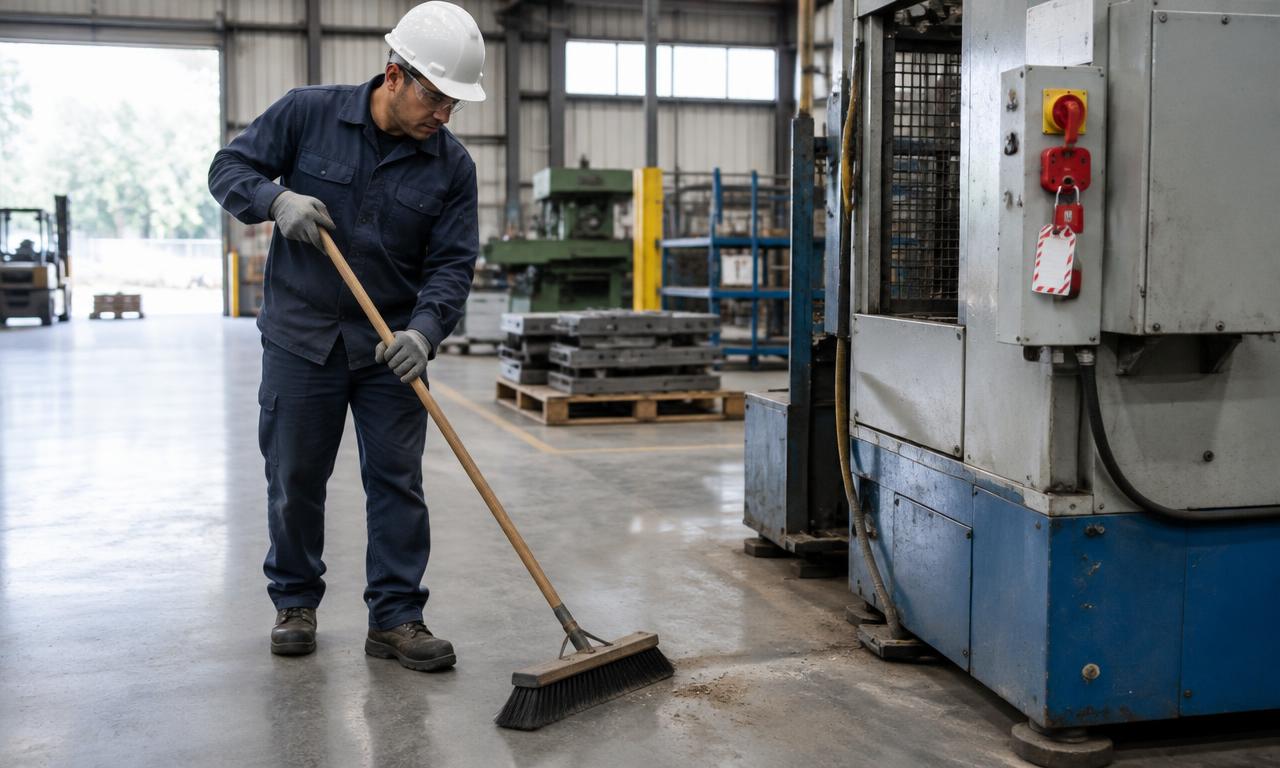
| Cleaning requiring equipment to be locked out and tagged out | Only if plant procedures permit and clear the work | Authorized maintenance or operations personnel | Plant procedure and work permit; contractor never defines or executes lockout |
| Internal machine cleaning, opening guards, or removing shields | No | Maintenance or specialized mechanical contractor | Explicitly excluded from general cleaning scope |
| Tanks, silos, pits, hoppers, and potential confined spaces | No (as a general rule) | Trained, authorized personnel under plant entry permit | Express exclusion; if outsourcing, execute a specialized service contract |
| Use of solvents or industrial degreasers | Conditional | EHS approves | Approved chemical list with SDS; manufacturer compatibility; no mixing |
| Work at heights | Conditional | Under plant heights procedure | Refer to heights guide |
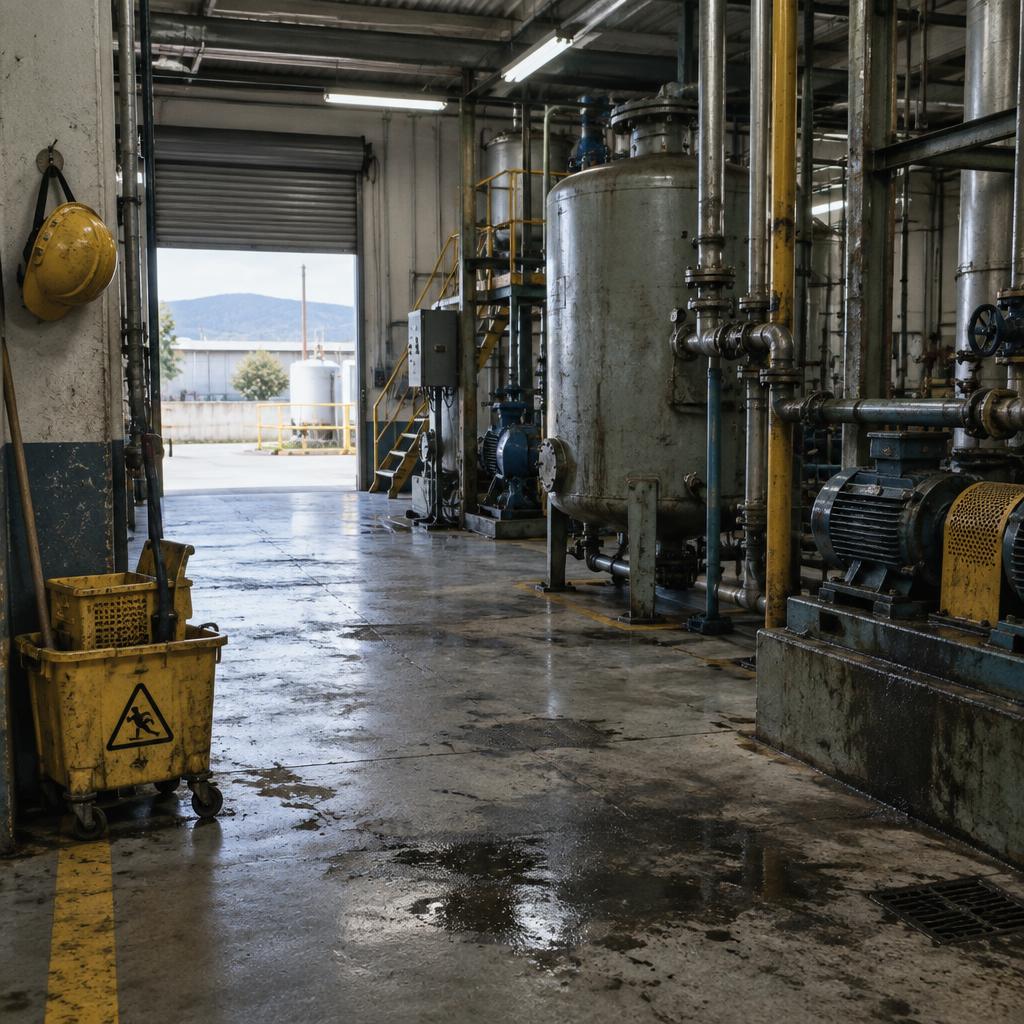
| Determining, storing, and disposing of hazardous waste | No | Environmental manager and licensed waste handler | Separation of responsibilities; disposal costs for special cleanings |
*If a task is not listed, treat it as "conditional" until EHS formally classifies it.*
Common mistakes
- A scope of work stating "machinery cleaning" with no boundary conditions. This is the most frequent source of operational gaps.
- Assuming that a stopped machine is safe to clean. Operating condition must be verified by the plant in writing.
- Failing to explicitly exclude tanks and enclosed vessels.
- Approving a degreaser by trade name alone without reviewing its SDS and OEM manual restrictions.
- Expecting the contractor to "haul away" whatever waste they generated without defining waste classification and authorized disposal channels.
- Giving direct operational orders to the contractor's staff instead of communicating through their designated supervisor.
- Expanding the scope informally during the shift without updating permits or contracts. Scope adjustments must be quoted and authorized in advance.
Warnings
This article does not constitute legal, technical, or environmental advice. Regulations change and their application varies by facility. Verify current status and scope in official sources and validate this content with your EHS specialist, environmental manager, and legal counsel.
>
No operational work instructions. This guide does not provide procedures for isolating machinery, entering confined spaces, or handling chemicals; these activities must be executed exclusively by qualified, authorized personnel under facility procedures.
>
Manufacturer instructions take precedence. For any piece of equipment, the OEM manual and manufacturer guidelines override any general recommendation.
Scope checklist before contracting machinery and plant cleaning
| ☐ | Item | Verification Evidence | Responsible Party |
|---|---|---|---|
| ☐ | Inventory of included equipment/areas, and explicitly excluded ones | Scope appendix | Operations / Maintenance |
| ☐ | Each task classified: delegable, conditional, or non-delegable | Validated decision table | EHS |
| ☐ | Required equipment state defined and verification role assigned | Name, title, and sign-off log | Maintenance / Operations |
| ☐ | Tanks and enclosed spaces evaluated and, if applicable, excluded in writing | Exclusion clause | EHS |
| ☐ | List of permit-required tasks, issuer roles, and sign-off procedures | Task list and permit form | EHS |
| ☐ | Authorized chemical products with reviewed Spanish SDS on file | SDS binder and approved list | EHS |
| ☐ | OEM manufacturer restrictions reviewed for each machine | Maintenance sign-off memo | Maintenance |
| ☐ | Waste: determination, storage, and disposal defined; vendor role clear | Written agreement | Environmental Manager |
| ☐ | Shift-by-shift safety contacts established for plant and vendor | Contact directory | EHS |
| ☐ | Communication protocol: observations directed to vendor supervisor | Safety appendix | Legal / EHS |
| ☐ | Protocol established for unexpected conditions or safety incidents | Agreed incident procedure | EHS |
| ☐ | Scope changes: quoted and approved before execution | Contract amendment clause | Procurement / Legal |
*Usage: complete this checklist before soliciting bids, and review it whenever equipment, facility layouts, or chemical products change.*
Next steps
To request a proposal, visit our quote page; if you need to review how contractor compliance is documented, visit our compliance section. You can also explore our industrial sector cleaning services.
The most effective step you can take before requesting vendor proposals is dividing your scope into three distinct buckets: what can be delegated, what can be delegated only under plant-verified conditions, and what cannot be delegated at all. This ensures vendors quote exactly what you expect and gives your EHS team clear visibility on necessary permits. For structuring the rest of your agreement, review our guides on [essential cleaning contract clauses](/recursos/contrato-servicios-limpieza-clausulas-minimas) and [what an institutional cleaning service includes](/recursos/que-incluye-servicio-limpieza-institucional).
Sources
Use this checklist in your next quote or renewal.
To get a quote from SELIMEX, use the quote page; for more information, see the compliance section.