Summary
In a corporate office, most cleaning complaints do not stem from dirty floors, but rather from unwritten expectations: who enters executive suites and when, what to do with a paper-cluttered desk, how long a conference room can wait between meetings, and whom to notify when an issue arises. This guide outlines how to solve this area by area through four operational decisions (standards, cleaning windows, access protocols, and confidentiality rules) and a single channel for complaints. It includes a standards and access table as well as an area-by-area checklist.
The short answer
Define four things in writing for each sensitive area: what level of cleanliness is expected (described by visual outcomes, not subjective adjectives), when it is performed (the service window and protocol if the area is occupied), who grants access and how (keys, access cards, escort, logbook), and what is cleaned versus what must not be touched across desks, conference rooms, and filing cabinets. Next, establish a single channel for occupant feedback: the user notifies building management or the help desk, management logs and forwards the issue to the vendor's supervisor, and the vendor resolves it. This protects sensitive information, prevents individual executives from giving conflicting instructions, and preserves evidence for contractual oversight and cleaning service supervision.
What "Class A" means and why it matters in sensitive areas
"Class A" is a commercial real estate term designating high-specification corporate buildings; it is neither a regulatory benchmark nor a cleaning classification, and each facility applies it differently. What Class A facilities do share is an occupant expectation of a consistent, discreet environment where distinctly different spaces coexist under one roof: boardrooms that require resetting between meetings, executive suites housing confidential data, dining areas with specific food safety considerations, and client-facing reception spaces that project the corporate brand.
Consequently, a single "building-wide standard" typically falls short in high-visibility zones while misallocating labor in lower-priority spaces. A survey of common facility complaints published by CleanLink (based on a 2017 poll of *Facility Cleaning Decisions* readers, without a disclosed sample size) ranked overall restroom cleanliness as the top complaint, followed closely by the perception of insufficient service frequencies. While this serves as an older benchmark from another country rather than a direct assessment of your facility, it reflects common operational friction points.
A standard per area, not one for the whole building
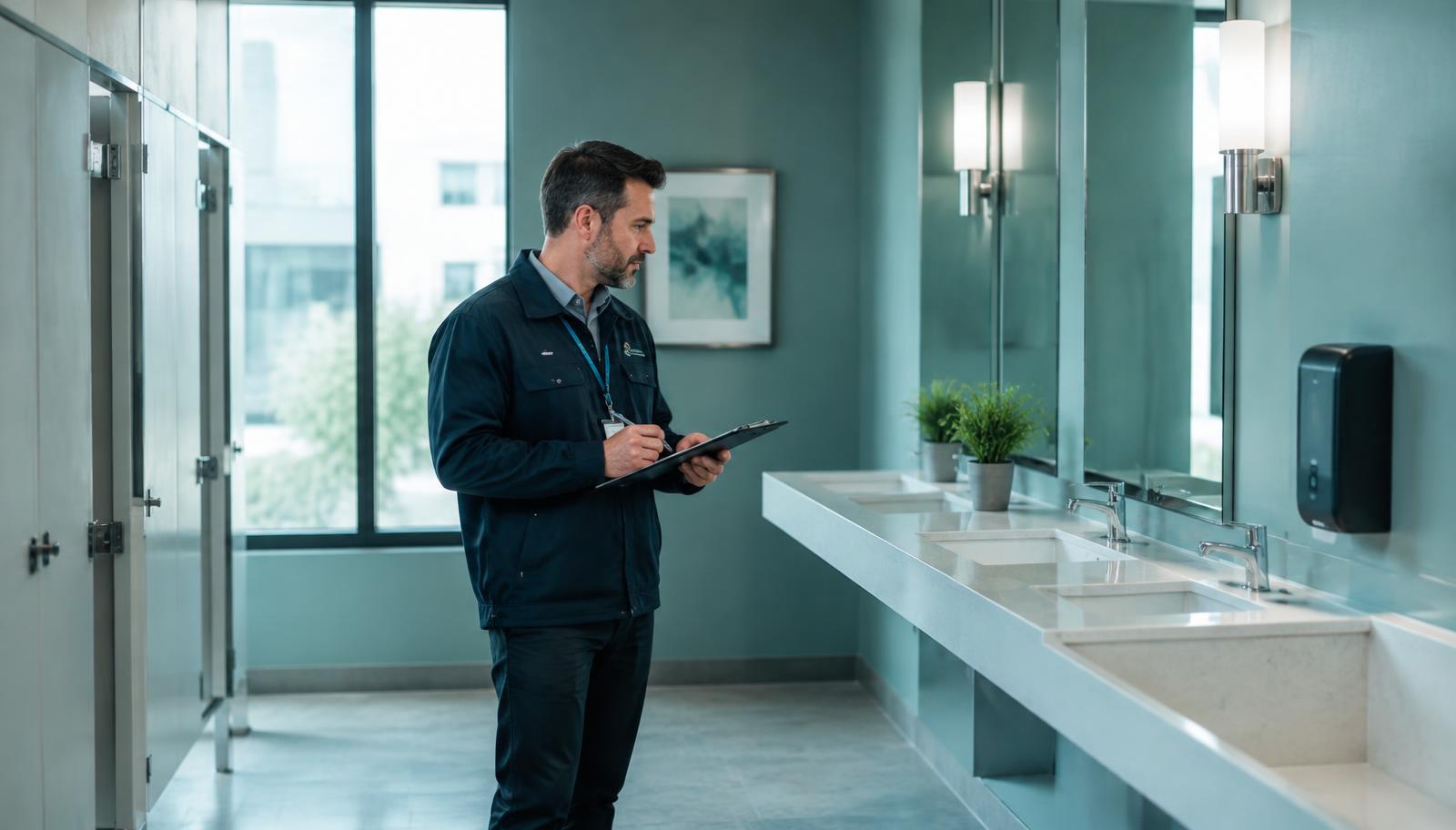
To achieve clear alignment, use an evaluation framework based on observable outcomes. A widely recognized example is APPA's five cleaning levels for facilities, ranging from Level 1, "Orderly Spotlessness" (surfaces free of dust, marks, and fingerprints; odorless, fully stocked restrooms), down to Level 5 (unkempt/abandoned). APPA presents these as adaptable guidelines rather than rigid mandates; the cited reference is an introductory presentation rather than the complete standard, and it does not map specific levels to individual space types—that allocation remains your operational decision. Our guide on supervision and performance indicators details how to deploy these levels for inspections; here, they serve to establish baseline expectations per zone.
A practical approach (general recommendation, not a statutory standard):
- Zone the floor plan: Executive offices and boardrooms; meeting spaces; cafeterias and break rooms; reception and client service desks; general workspaces; restrooms.
- Assign a target benchmark to each zone defined by 4 or 5 observable criteria (e.g., glass free of smudges, conference table dry and mark-free, wastebaskets emptied, room free of odors, chairs aligned).
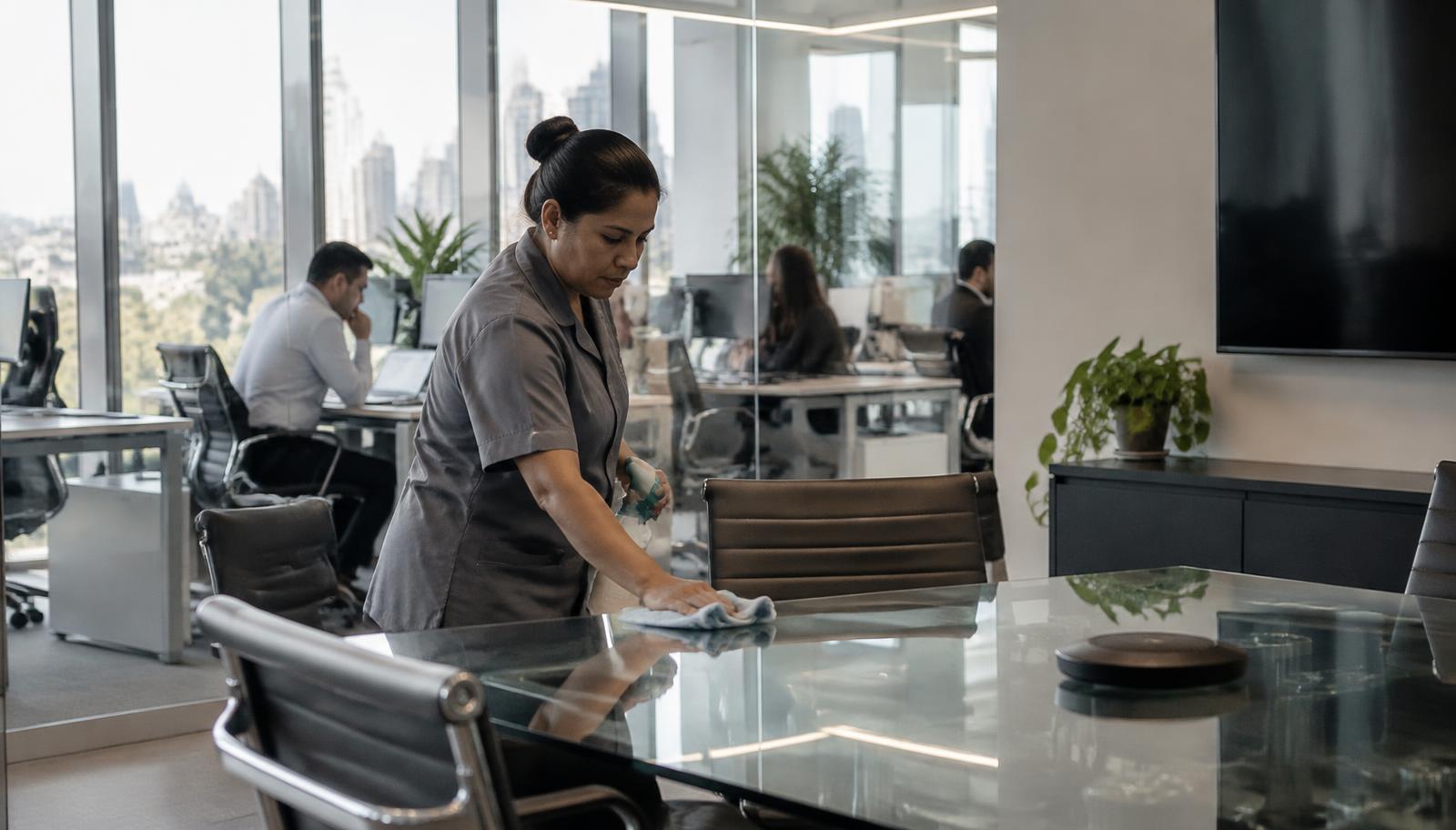
- Differentiate scheduled cleaning from on-demand turnover. Boardrooms and reception desks often require spot cleaning between meetings in addition to daily service; define this as a requested service with an agreed response time, not a vague mandate to be "constantly pristine."
- Schedule service windows by zone. A detailed comparison between day and evening shifts is available in our guide on daytime vs. night shift cleaning; as a baseline, executive suites are often serviced outside core business hours, while client reception areas should be prepped prior to opening.
Cafeterias and break rooms require specific attention. Cleaning food-handling areas involves explicit sanitation guidelines and, if an external food service vendor is present, coordination with their operational protocols. Clarify with your environmental health and safety (EHS) team and the catering vendor who cleans what (kitchen, service line, tables, floors) and which approved chemicals are permitted; this guide does not set food sanitation procedures.
Access and confidentiality
Managing sensitive corporate spaces requires auditable access rules rather than general assumptions of trust:
- Authorized personnel. A designated point of contact from building management or physical security grants and revokes access per zone. The contractor provides a list of assigned personnel and proactively reports roster updates or temporary relief staff; see our guide on cleaning staff, training, turnover, and shift coverage.
- Access methods. Keycards or physical keys with access logging, supervised escorts for high-security spaces, or scheduling entry exclusively during unoccupied windows based on corporate security policies. Define a formal return protocol for access credentials.
- Access logging. A physical or digital access log per area and shift; without it, investigating a lost item or data breach becomes impossible.
- Confidentiality agreements. An explicit confidentiality clause or addendum between client and contractor detailing protected items (documents, monitors, overheard discussions, physical facilities), the vendor's obligation to train its personnel on these terms, and mandatory immediate reporting of any incident. This must be integrated into your cleaning service contract clauses.
Personal data compliance: Mexico's Federal Law on Protection of Personal Data Held by Private Parties (LFPDPPP - *Ley Federal de Protección de Datos Personales en Posesión de los Particulares*), published in the Official Gazette of the Federation (DOF) on March 20, 2025, and amended on November 14, 2025 according to diputados.gob.mx, requires data controllers to implement administrative, technical, and physical safeguards against unauthorized access or processing (Art. 18) and establish confidentiality controls across all personnel involved (Art. 20). Whether cleaning crew members technically *process* personal data depends on the scenario (passing by a physical file vs. handling it), which is a legal question for your compliance counsel. In practice, mitigate exposure at the source: require clean-desk compliance, locked filing cabinets, and auto-locked screens rather than relying on cleaning staff simply "not reading" visible information.
Personal belongings and paperwork on desks
This is where the majority of workplace cleaning misunderstandings happen. Establish a clear policy and communicate it to corporate staff before service begins:
- Clean-desk policy. Items that should not be seen or handled must be put away. Enforcing this is an internal policy directed at employees, not a task for the cleaning vendor. Cleaning crews do not organize papers, open drawers, or sort through documents.
- Protocol for occupied or cluttered desks. Personnel should wipe down unobstructed surface areas, cleaning around items without moving them, and refrain from opening drawers or files. If clutter prevents cleaning, a standard notification card can be left behind. Detail this explicitly in the scope of work.
- Misplaced items and sensitive documents. If staff members discover personal valuables or confidential files in unexpected places (on the floor, in a wastebasket, left in a conference room), they must not relocate or discard them independently. The finding should be reported to the cleaning supervisor and escalated to facility management, noting the exact time and location.
- Reported loss or damage. Treat any reported loss as an operational incident under your formal protocol as described in our incident management and reporting guide: log the claim, document the facts, audit access logs, and notify the vendor without making premature assumptions.
An operational boundary warning: the facility sets site policies and communicates them internally; the contractor organizes and directs its staff to execute the scope. If corporate employees issue direct work orders to contractor personnel, the relationship risks violating the prohibition against supplying labor directly under Article 12 of Mexico's Federal Labor Law (LFT - *Ley Federal del Trabajo*). Validate your operational oversight procedures with your corporate legal counsel.
Occupant complaints: A single channel
Two common management pitfalls exist. The first is disregarding user complaints; as CleanLink notes in the cited article, facility complaints must be addressed whether founded or not, though fielding them haphazardly drains staff time. The second pitfall is allowing occupants to give direct instructions to front-line cleaners, which creates conflicting priorities and deprives vendor management of performance visibility.
A structured resolution workflow:
- Occupants report issues through a single intake channel: the building service desk, facility management, or a dedicated ticketing system. Never directly to front-line staff.
- Facility management logs the ticket (location, timestamp, description, photo when available) and categorizes it: missed service, quality issue, conduct, or incident.
- The ticket is routed to the contractor's site supervisor, not the individual cleaner, alongside an agreed response time based on category.
- The contractor rectifies the issue and reports completion, allowing facility management to close the loop with the occupant.
- Complaints are audited during regular vendor reviews to identify systemic patterns (e.g., recurring issues in a specific department or shift) and recalibrate the scope of work or training programs.
Response times and escalation procedures should be defined in the service contract rather than left open-ended. Additionally, communicate service schedules and desk policies directly to occupants; CleanLink highlights that clear schedule communication and courtesy training serve as core strategies to minimize privacy concerns and friction during day-cleaning operations.
Standards and access table
This is an illustrative, customizable example—not a statutory rule or rigid frequency prescription. Specify service levels, windows, and response times to match your facility's operational requirements.
| Area | Benchmark Level (e.g., APPA framework) | Typical Service Window | Access Method | Confidentiality Rules | On-Demand Service |
|---|---|---|---|---|---|
| Executive Suites and Offices | High (observable criteria) | Outside business hours or while unoccupied | Key or keycard with logbook; escort if required | Clean-desk rule; do not open drawers; report misplaced items | Prior notice to occupant or executive assistant |
| Boardrooms and Meeting Rooms | High prior to each use | Between meetings and end of day | Open during operational hours or via room reservation | Do not erase whiteboards or move papers; log found items | On-demand turnover within agreed response time |
| Cafeterias and Break Rooms | Per health standards and catering vendor protocol | Post-meal service and end of day | Zone-specific (kitchen vs. dining floor) | Approved chemicals with SDS; commercial kitchen off-limits if assigned to caterer | Define who handles active spills during meal service |
| Reception and Client Service | High at opening | Prior to opening, with scheduled touch-ups | Unrestricted during business hours; locked offices logged | Discretion around visitors; no discussions about clients | Priority on-demand touch-up response |
| General Workstations | Building baseline standard | Day or night shift per operational model | Shift-based access logging | Clean unobstructed surfaces; work around desk items | Single reporting channel |
| Restrooms | High, focused on supply levels | Scheduled rounds based on foot traffic | Unrestricted | N/A | Inspections and restocking at scheduled intervals |
Common mistakes
- Applying a single standard building-wide. High-profile and sensitive zones require custom criteria.
- Relying on staff discretion instead of systemic controls. Clear and secure sensitive data; do not assume cleaners simply will not read it.
- Allowing unmonitored access without access logs. Without records, investigations into missing property cannot be verified.
- Permitting occupants to give direct orders to cleaning crews. Route all requests through the vendor's supervisor.
- Taking found property "for safekeeping" without documenting it. Report and record every instance immediately.
- Treating operational complaints and security incidents the same way. Property damage or misconduct demands a distinct investigation protocol.
- Conflating contractual confidentiality clauses with statutory data protection compliance.
Warnings
Legal and technical disclaimer. Determining personal data processing liabilities, reviewing contractual confidentiality provisions, and balancing site oversight against co-employment risks must be confirmed with your legal department.
>
Chemical and procedural handling. This guide does not outline chemical mixtures, dilution rates, or cleaning techniques; these are governed by the Safety Data Sheet (SDS) of each product and your facility EHS specialist.
>
General recommendations. The cleaning levels, time windows, and response targets mentioned are illustrative models; they do not represent statutory mandates or performance claims regarding any specific vendor.
Area checklist
| ☐ | Area | Verification Item | Evidence |
|---|---|---|---|
| ☐ | All | Defined zones with target cleanliness levels and observable criteria | Scope of Work Addendum |
| ☐ | All | Designated manager authorized to approve area access | Name and official contact channel |
| ☐ | All | Roster of assigned vendor personnel with change/coverage notifications | Updated roster |
| ☐ | All | Executed confidentiality clause or agreement | Service contract |
| ☐ | All | Centralized complaint intake channel with defined response SLAs | Published SOP |
| ☐ | Executive Suites | Service window and access defined; clean-desk policy communicated | Access log; employee notice |
| ☐ | Executive Suites | "Do not open drawers, do not move paperwork" clause included in scope | Scope of Work |
| ☐ | Boardrooms | On-demand service established with guaranteed response times | Request log |
| ☐ | Boardrooms | Documented protocol for handling whiteboards and forgotten property | Standard procedure |
| ☐ | Cafeterias | Delineation of cleaning duties vs. catering staff; SDS on file | Operational agreement |
| ☐ | Client Service | Scheduled service prior to opening and defined daytime touch-ups | Shift schedule |
| ☐ | Client Service | Mandatory visitor-discretion guidelines for staff | Documented training log |
| ☐ | All | Centralized ticket log, categorization system, and periodic vendor reviews | Complaint logbook |
| ☐ | All | Formal protocols for lost items, recovered property, and incidents | Incident response protocol |
*Usage: Review this checklist during kickoff meetings with facility management, corporate security, and the contractor's site supervisor; audit it whenever space allocations, occupants, or cleaning personnel change.*
Next steps
Select a floor plan featuring executive and client-facing areas, complete the standards and access table with facility management and physical security, and append missing items to your vendor contract. To review contractor compliance requirements, visit our compliance section. If you require a tailored corporate service proposal, submit your specifications on our quote page. Sector-specific context can be found under corporate offices.
Cleaning sensitive corporate spaces requires clear operational agreements rather than ad-hoc effort: a target benchmark per zone, structured access controls, unambiguous clean-desk boundaries, and a single channel for service requests. Contractors perform more effectively when evaluated against objective criteria, and occupants experience reliable service when they know exactly how to route feedback. For an end-to-end procurement framework, read our [guide to hiring institutional cleaning services](/recursos/guia-contratar-limpieza-institucional).
Sources
Use this checklist in your next quote or renewal.
To get a quote from SELIMEX, use the quote page; for more information, see the compliance section.