
Summary
Supervising a cleaning service well is not about checking everything, but about agreeing in advance on what is measured, how, how often, and who signs off. A streamlined system combines four elements: a reference visual standard by area type, a schedule-compliance log, sample-based audits using a consistent form, and regular meetings with actions and deadlines. This gives the client visibility and tells the provider how it will be evaluated. This guide explains why each element matters, when to use it, and provides a supervision template ready to adapt.
The Short Answer
Define an expected cleanliness level by area type (for example, reception, restrooms, open-plan offices, and records storage), agree on three to five metrics both parties can verify, inspect a sample of areas using a consistent form weekly or every two weeks, and meet monthly to close out actions. If the provider completes the schedule and inspections confirm the agreed level, no additional oversight is needed. If an issue recurs, expand sampling in that zone, not throughout the building.
Why Micromanagement Happens (and Why It Does Not Work)
Micromanagement almost always stems from a lack of shared criteria. If no one has defined what "clean" means in a restroom or conference room, every walkthrough produces a different opinion, and the response is to inspect more. The effect is twofold: the client's team spends hours on unstructured walkthroughs, while the provider responds to individual complaints instead of meeting a standard.
The alternative is to replace opinions with written criteria and comparable samples. Disagreement then becomes a specific question: does the area meet the level agreed on in the form, yes or no?
An important distinction: delegating operations does not transfer all responsibility. Under Article 14 of the LFT (Federal Labor Law), a company hiring specialized services is jointly and severally liable if the contractor fails to meet its labor obligations to the workers involved. Quality supervision therefore goes hand in hand with documentation compliance checks, covered in the guides to verifying REPSE and maintaining an up-to-date provider file. Here, we focus on service quality.
What to Measure: Three Layers of Metrics
A practical way to organize metrics is to separate them into three layers. You do not need all of them from day one.
Layer 1 · Schedule compliance (was the agreed work done?). Percentage of scheduled tasks completed properly and on time, recorded in a log: restroom cleaning frequency, container emptying, window cleaning, and scheduled deep cleaning. This is the easiest metric to verify and the first one to establish.
Layer 2 · Area condition (what was the result?). Findings from sample-based inspections, scored by area or criterion: floors, touch surfaces, restrooms, dust at accessible heights, odors, and replenished supplies. This layer replaces opinion with data.
Layer 3 · Response and perception (how does the service respond, and how do users view it?). Response time to a report, recurring complaints by area, corrective actions closed by the committed date, and, if useful, a brief user survey. Perception complements inspection; it does not replace it.
Each company and its provider set numerical targets (for example, an acceptable percentage) based on the facility; this guide does not propose universal figures.
How to Measure: Visual Standards, Sampling, and Sometimes Objective Testing
Reference visual standard. Frameworks that describe cleanliness levels can help establish agreement. The most frequently cited is APPA, which describes five custodial cleanliness levels, from the highest (spotless) to neglect. APPA presents these as operational guidelines each institution can adapt, not mandatory standards, and they were originally intended for educational institutions. The useful principle is to agree with the provider on the expected level for each area type and describe it in the same words. You can use this approach to write your own three- or five-level scale with photographs of your facilities.
Sampling. You do not need to inspect 100% of areas. Define a sample (for example, a percentage of areas per visit, rotating the areas selected) and use the same form each time. Sampling costs less, is repeatable, and reveals trends.
Objective testing. Some frameworks supplement visual inspection with objective testing. For example, the ISSA Clean Standard: K-12 combines ATP testing (which detects organic residue) with sample-based audit forms based on what is seen, smelled, and touched. This standard is designed for schools and access is limited to ISSA members, so it serves here as an example of an approach, not a corporate office requirement. If your facility uses objective testing, define with the provider what is tested, with which equipment, how results are interpreted, and what happens when a result is out of range. General recommendation: start with visual inspection and add objective testing only if a health risk or an agreement justifies it.
Who Supervises and How Often
A simple division of responsibilities works well in corporate offices:
- Provider's supervisor: conducts walkthroughs and records findings daily or per shift. This is the first line of control and must leave evidence in the log.
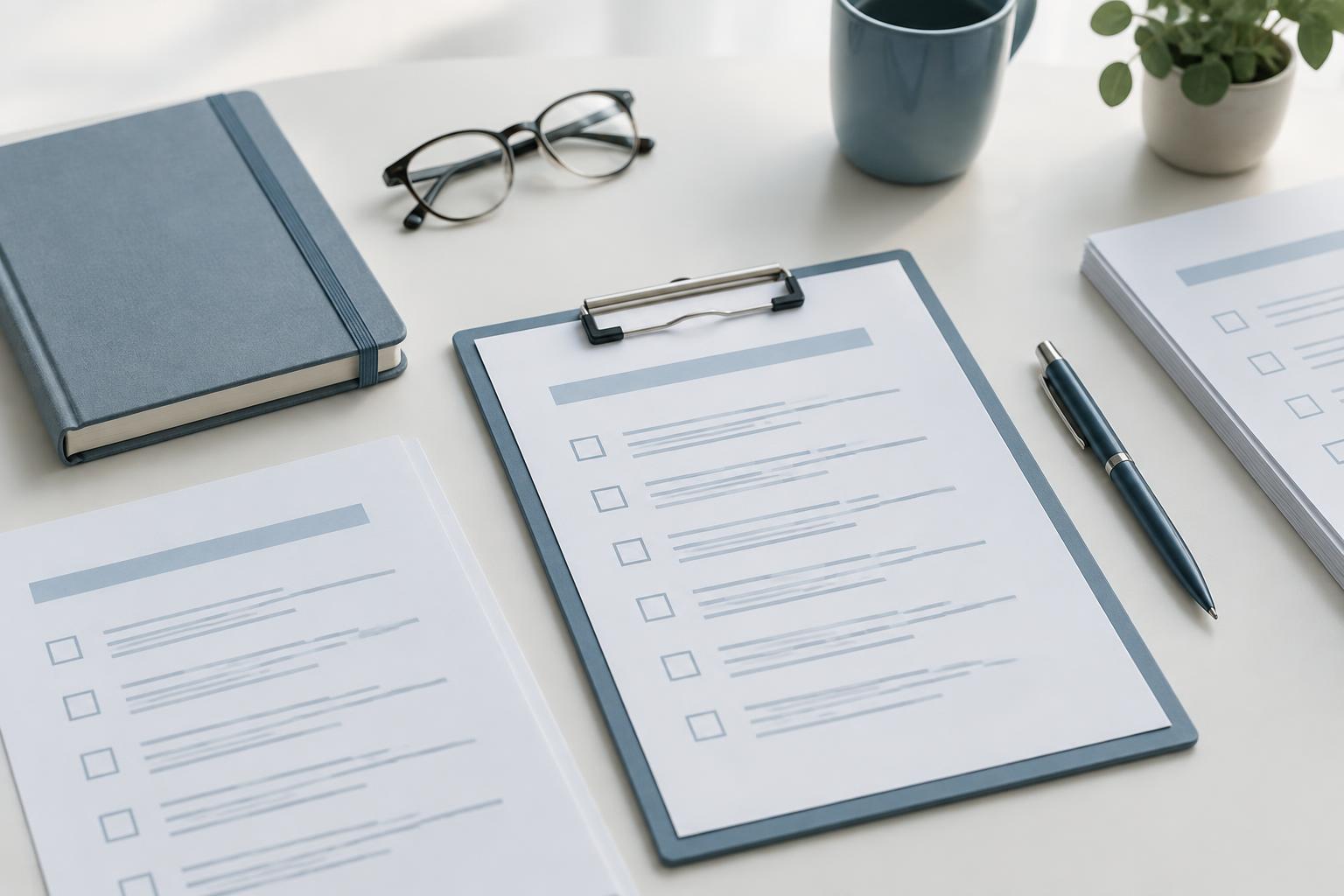
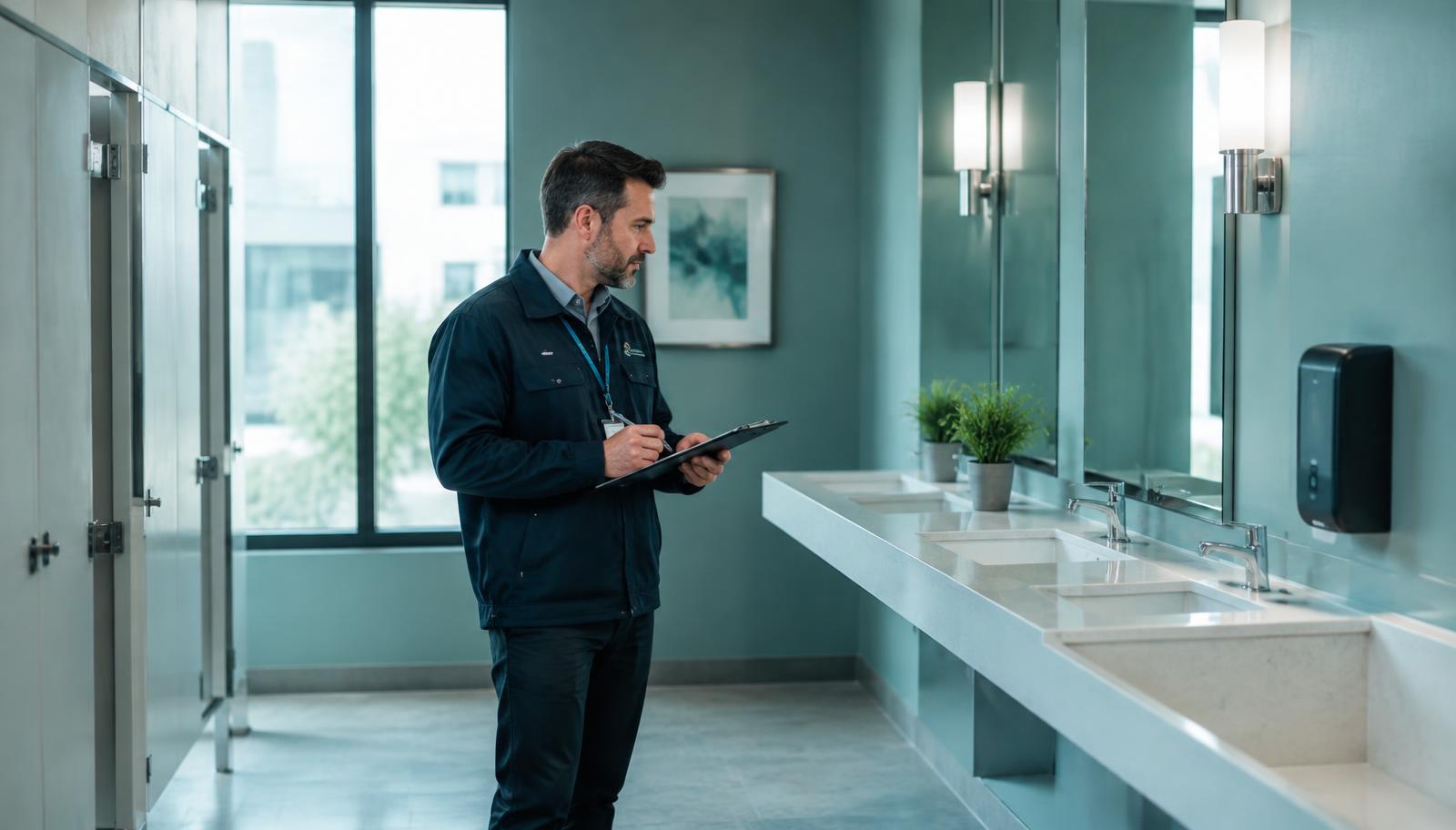
- Client representative (Facility Manager or designee): audits a sample using the agreed form weekly or every two weeks, depending on size. Signs off or opens a corrective action.
- Monthly meeting: reviews metrics, trends, complaints, open actions, and schedule changes. Brief minutes document owners and deadlines.
If the contract provides for it, the monthly meeting is also the place to discuss scope changes. If the contract does not define these mechanisms, consider adding them to the service-level appendix (see the contract clauses guide).
On management systems: the international standard ISO 41001:2018 specifies requirements for a facility management system, has "published" status, and is marked for revision; ISO is developing a second edition (ISO/DIS 41001). It is a management standard for organizations, not an inspection form. Requiring it of a cleaning provider is neither a legal requirement nor necessary for effective supervision.
What the Provider Should Report
A useful report is brief and repeatable. Suggested content, to be agreed on in the contract:
- Schedule compliance during the period (completed / pending / rescheduled, with reason).
- Results of the provider's own internal inspections.
- Incidents and corrective actions (what happened, what was done, and when).
- Changes in key on-site personnel and access needs.
- Relevant supplies and consumption, if included in the service.
- Improvement proposals or risks identified by the provider.
Distinguish the operational report (weekly or every two weeks, reviewed by the site lead) from the executive report (monthly, one page, reviewed by the renewal decision-maker).
Alternatives and When to Choose Them
| Option | When to use it | Advantage | Limitation |
|---|---|---|---|
| Unstructured walkthrough without a form | Only during a very brief startup period | Fast | Not comparable or useful for discussing results |
| Sample-based visual inspection with a consistent form | Most corporate offices | Low-cost, repeatable, shows trends | Depends on clearly defined criteria |
| Visual inspection + objective testing (for example, ATP) | Areas with health risks or a specific agreement | Provides measurable data | Requires agreed equipment, methods, and interpretation criteria |
| External audit or provider certification | Large operations or those with corporate requirements | Independent perspective | Cost and time; does not replace daily supervision |
On certifications: frameworks such as ISSA CIMS assess a cleaning company's management system (quality, service delivery, personnel, health and safety, among other sections). The source we consulted is a commercial inspection-software website, so consult ISSA's official document for exact requirements. If the provider has this type of certification, it is one more input for your evaluation; it does not replace your own inspections.
Common Mistakes
- Supervising without a written standard. Every walkthrough produces a different opinion.
- Measuring too much. No one reviews twenty metrics. Start with three to five.
- Measuring only complaints. Complaints arrive late and are biased toward the negative.
- Failing to close the loop. An inspection without corrective action, an owner, and a deadline is just a record.
- Confusing documentation compliance with service quality. An orderly file does not guarantee clean restrooms, and vice versa.
- Changing criteria midway. Any change to the standard must be documented and dated.
- Always auditing the same areas. Sampling must rotate.
- Requesting objective tests without a method. A number without interpretation criteria creates more debate, not less.
Warnings
Supervision Template
A. Standard by area type (complete one row per type)
| Area type | Expected level (describe with words and a photo) | Cleaning frequency | Criteria to inspect |
|---|---|---|---|
| Reception / lobby | |||
| Open-plan offices | |||
| Restrooms | |||
| Conference room | |||
| Kitchenette / dining area | |||
| Other: ______ |
B. Sample-based inspection form (weekly or every two weeks)
| Area inspected | Criterion (floors, surfaces, odor, supplies, etc.) | Meets / Does not meet requirements | Evidence (photo / note) | Corrective action | Owner | Committed date |
|---|---|---|---|---|---|---|
C. Monthly metrics (3–5; targets defined by the client and provider)
| Layer | Metric | How it is verified | Target | Monthly result | Trend |
|---|---|---|---|---|---|
| 1 Schedule | % of scheduled tasks completed | Log | |||
| 2 Condition | % of sampled areas meeting requirements | Form B | |||
| 3 Response | Response time to reports / actions closed on time | Report log |
D. Monthly meeting agenda: 1) Metrics and trends; 2) incidents and open actions; 3) schedule or scope changes; 4) risks; 5) commitments with owners and deadlines.
Use: share this with your provider before startup or renewal and jointly adjust the "expected level" and "target" columns.
Conclusion
Effective supervision means agreeing in advance on what "clean" means in each area, how it is verified, and what happens when requirements are not met. A written standard, repeatable sampling, and monthly meetings with actions improve visibility without your team having to monitor every shift.
Next Step
Choose one area type, document its expected level, and test Form B for two weeks. Then adjust metrics and frequency. For documentation compliance, visit the compliance section, learn about the approach for corporate offices, or request a proposal on the quote page.
Sources
Bring this guide to your next provider review.
To get a quote from SELIMEX, use the quote page; for more information, see the compliance section.