

Introduction
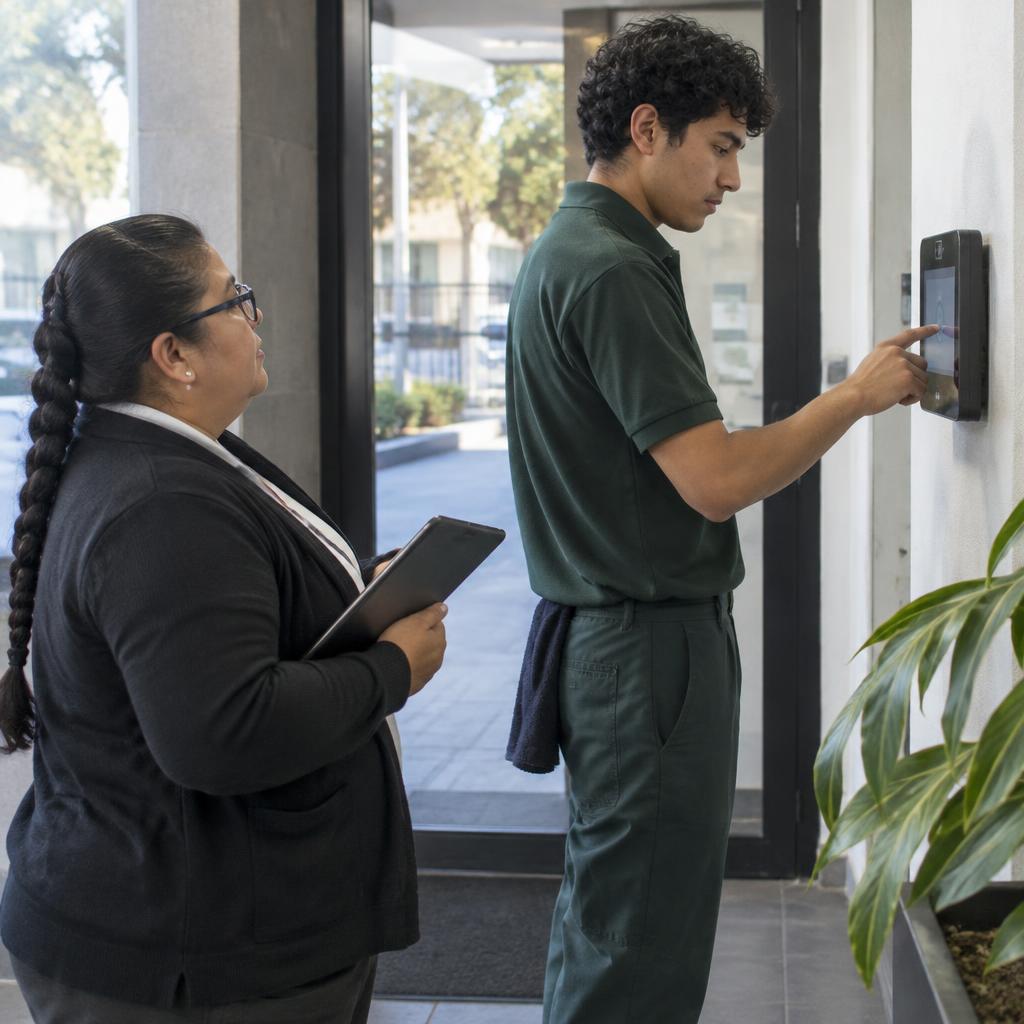
*The law now requires employers to track working hours electronically. What remains to be defined are the details. Here is what we do know and how to prepare as a client.*
Summary
The decree reducing the workweek, published in the Diario Oficial de la Federación on May 1, 2026, also added an obligation for employers: to electronically record the working hours of each worker. The details (who it applies to, what exceptions will exist) will be established by the Secretaría del Trabajo y Previsión Social (STPS) in general provisions that, according to the decree, take effect on January 1, 2027. In a cleaning service, the employer is the vendor, not you; but as a client, it pays to know whether they are compliant. Here we explain what the law says, what we do not yet know, what you can request without infringing upon their labor relationship, and what to watch out for regarding personal data.
The short answer
The party obligated to track working hours is the employer: in a contracted cleaning service, the vendor. Your role is to verify that they do so and that you can obtain evidence of it, not to install your own system to monitor their personnel. Prior to 2027, include a clause in your contract requiring the vendor to comply with time tracking requirements as determined by the STPS and to provide periodic evidence to you. And ask your legal department to review how personal data is handled.
What the law says
The addition to Article 132 of the LFT (Section XXXIV) establishes, in summary, that the employer must electronically record the working hours of each worker, including start and end times, and provide this record to the authorities upon request. Other points of the decree:
- Who determines the details: the STPS will issue general provisions determining the scope of application and exceptions to this obligation.
- From when: Transitory Article Five provides that these provisions will take effect on January 1, 2027. The decree does not set a deadline for the STPS to publish them.
- Evidentiary value: the content of the electronic record will constitute full proof if it is proven that it was agreed upon between the worker and the employer.
- Penalty: Article 994 adds Section IV Bis, establishing a fine of 250 to 5,000 Unidades de Medida y Actualización for an obligated employer who fails to comply.
What is not yet defined
The decree specifies "electronically," but does not specify with what technology. In our review, we found no requirement in the text for fingerprints, facial recognition, or any other specific method. An academic cited in the press stated that the law does not mandate these methods, but that is an opinion, not statutory text. As of the date of this review, we could not confirm that the STPS has published its general provisions; a press report dated November 3, 2026, indicated that it had not done so. Check the STPS website before making any decisions.
Among others, the following questions remain open: which companies or roles will have exceptions, what format and minimum data will be required, how long records must be retained, how to track staff working outside a fixed location or at client facilities, and how the agreement with the worker must be documented for the record to have full evidentiary value. This piece does not answer those questions; they will be answered by STPS provisions and your labor counsel.
Who is obligated and what role the client plays
In a specialized cleaning service, the staff belongs to the vendor, who hires them, pays them, and is accountable to the authorities as their employer. The decree mentions nothing about subcontracting or specialized services, so it does not alter that dynamic. Even so:
- Article 14 of the LFT provides that the contracting party is jointly and severally liable if the vendor fails to meet labor obligations toward the workers provided. That is why you need to know whether your vendor complies, and be able to prove it.
- Article 12 prohibits subcontracting personnel (placing workers directed by the contractor at the contractor's disposal). If you install your own time clock to control the hours of cleaning staff, or issue direct orders, you risk blurring the line between client and employer. The prudent course is for the vendor to operate the tracking system and for you to receive evidence, not control. Your legal counsel should confirm this for your specific case.
What you can ask of the vendor
Requesting evidence is different from controlling personnel. Examples of reasonable requests, to be refined with your legal department:
- Confirmation that the vendor has an electronic time tracking system in accordance with STPS provisions, along with the implementation date.
- Periodic compliance reports (e.g., monthly): number of workers assigned to your facility with active tracking, tracking incidents, and corrective actions, without needing individual personal data.
- Proof that the agreement with workers regarding time tracking is documented.
- Access procedure in the event of an official inspection or audit by the authorities, outlining how and who responds.
- A plan for sites without connectivity or fixed check-in points, if applicable (e.g., outdoor areas or remote facilities).
- Inclusion in the vendor file: the evidence is added to their vendor file, along with REPSE validity and other documentation (how to verify REPSE).
Personal data
A time record contains personal data of the people working at your site. If the vendor supplies itemized personnel lists with names, or if the system captures biometric data, data protection obligations arise. This piece does not go into detail: ask your legal team to define what data you will receive, for what purpose, how long it will be retained, and who will have access. A good starting rule of thumb is to ask for the bare minimum: an aggregated compliance report is often sufficient.
What not to do
- Do not install your own system to monitor vendor personnel without labor legal advice.
- Do not mandate a specific method (fingerprint, facial recognition, mobile app) unless STPS or your counsel supports it.
- Do not give direct orders to cleaning staff on your own; channel requests through the vendor's supervisor.
- Do not assume technology resolves compliance: a system without an agreement with the worker may lack the evidentiary value described by law.
Common mistakes
- Believing the obligation falls on the client rather than the employer.
- Waiting for the STPS to publish everything before initiating conversations with the vendor.
- Requesting named personal data for all staff without legal justification.
- Failing to update contracts and discovering in 2027 that there is no clause requiring evidence.
- Confusing time tracking with operational control of the service.
- Assuming a specific method (fingerprint, facial recognition) is mandatory.
Warnings
This is not legal or data privacy advice. The obligation, its exceptions, the required method, and evidentiary value depend on STPS regulations and your specific situation. Consult your labor attorney.
Status at the time of this review. We could not confirm whether the STPS has already published its general provisions. Verify the current status on the official website before acting.
The text of the decree was reviewed via the copy published by the Cámara de Diputados; verify it against the DOF.
Tool: checklist and sample clause
Checklist for your vendor (questions)
- Do you have an electronic time tracking system? Since when?
- How do you document it with your staff at my facility?
- What compliance report will you provide me, and at what frequency?
- How do you respond to an inquiry from the labor authority?
- What is your plan for areas without connectivity or fixed check-in stations?
- What personal data will you provide me, and under what conditions?
- How is this evidence integrated into your vendor file?
Sample clause (editorial draft, not legal text; legal counsel must adapt it)
"The Vendor, as employer of its personnel, agrees to comply with electronic working hours tracking pursuant to the Ley Federal del Trabajo and the general provisions issued by the Secretaría del Trabajo y Previsión Social, and to provide the Client, with the agreed frequency, proof of said compliance regarding assigned personnel, without this implying subordination of Vendor personnel to the Client. Personal data shall be processed in accordance with applicable regulations."
Complement this with minimum contract clauses and supervision KPIs.
Conclusion
Electronic time tracking is an employer obligation, with details still pending definition. As a client, you do not need to operate the system: you need a contract clause obligating the vendor, periodic evidence, and clear legal guidance. The sooner you discuss it, the less improvisation you will face in January.
Next step
Review your current contract: does it have a labor compliance clause and a requirement to provide evidence? If not, schedule a conversation with your vendor and your legal counsel. For the full procurement picture, consult the guide to contracting institutional cleaning. To request a quote, visit the quote request page.
Sources
Use this checklist in your next quote or renewal.
To get a quote from SELIMEX, use the quote page; for more information, see the compliance section.